
A Storm That Still Echoes: The Legacy of Ghost of Tsushima
Ghost of Tsushima's 'A Storm is Coming' trailer masterfully captures Jin Sakai's transformation from samurai to feared Ghost amid Mongol invasion.
The island did not sleep easy that night. Long before the Mongol ships appeared on the horizon, the people of Tsushima had heard whispers of a coming storm. In the cinematic trailer 'A Storm is Coming,' Sucker Punch turned those whispers into a raw and unforgettable promise. The screen opened not with a clash of swords, but with the slow footsteps of a man returning from defeat. That man was Jin Sakai, and his walk through the burning ruins said more than any dialogue ever could.
The preview did not rely on gameplay. It offered something far more intimate: a glimpse into a samurai trapped between two worlds. After the Mongol invasion, Jin Sakai found himself facing an enemy that did not respect the old codes of honor. The traditional samurai way demanded a direct challenge, one warrior facing another. But the Mongols brought overwhelming numbers, fire, and terror. They burned villages and cut down anyone who stood in their path.
That tension became the heart of the footage. Viewers watched Jin move through tall grass, strike from blind spots, and use tools that traditional samurai would have called dishonorable. Smoke, shadows, and silence became his new weapons. Each choice pulled him further away from the warrior he was raised to be. The storm was not only tearing across the island—it was building inside him as well.
The Birth of the Ghost
The images moved fast. A burning pagoda. A field of silver grass bending under a blood-red sky. A mask resting in Jin’s hands, simple and terrifying. The words 'A Storm is Coming' flashed across the screen like a warning. By the end, it was clear that Jin could not save Tsushima as a samurai. He had to become something else. He had to become the Ghost.
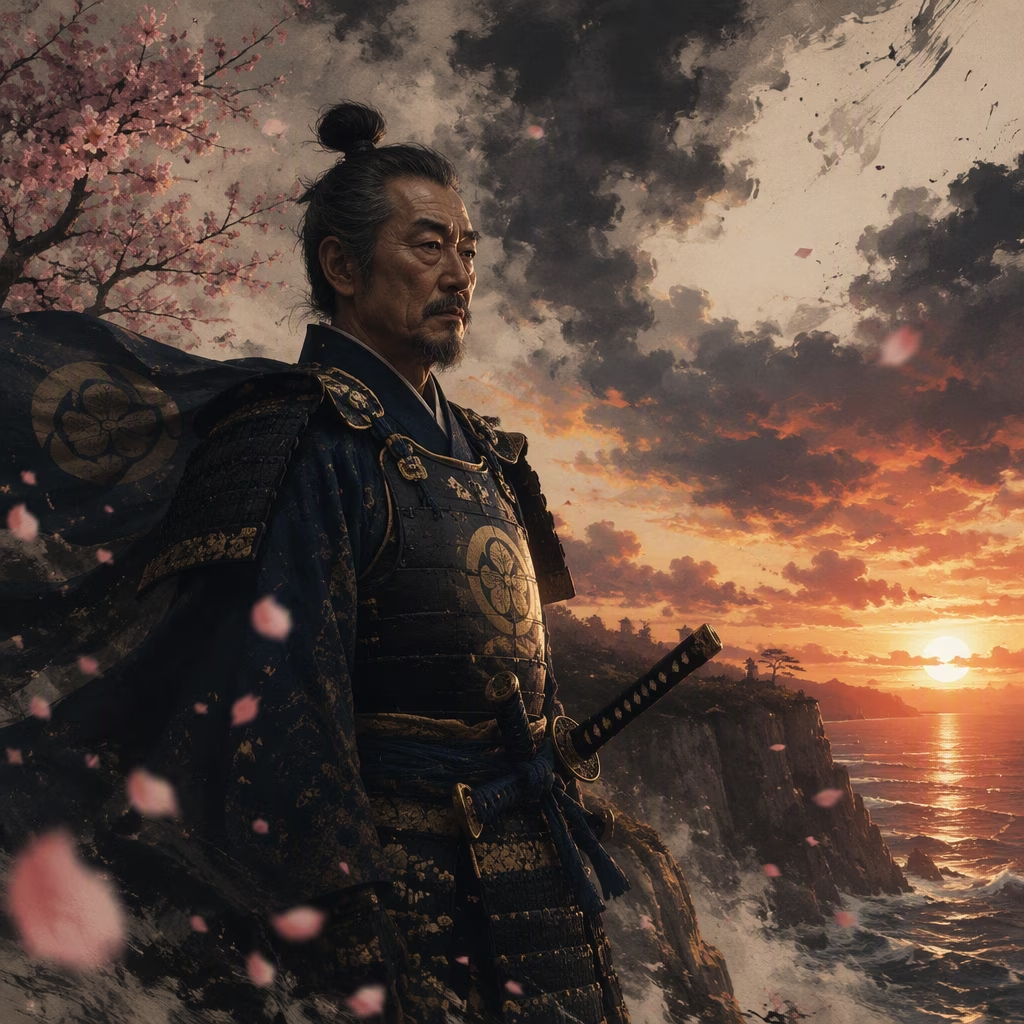
For many players, that trailer was the moment Ghost of Tsushima stopped being just another open-world action title. Sucker Punch had built a reputation for creative combat, but this felt different. The studio was creating a world drenched in wind, ash, grief, and beauty. The trailer did not explain skill trees or show off long combat combos. It trusted the audience to sit with the emotion first. That trust made the eventual gameplay reveals far more powerful.
The Promise Kept
When the game finally arrived on July 17 for the PlayStation 4, it delivered on the trailer's grim promise. Jin Sakai's journey was not a simple rise from tragedy. It was a slow and painful transformation. Allies questioned his methods. Enemies learned to fear the shadow moving through their camps. And players were left to decide how much of the old samurai code should survive inside a man who had become a living weapon.
Looking back from 2026, 'A Storm is Coming' still stands as a masterclass in tone. At a time when many studios filled the internet with lengthy gameplay demos, Sucker Punch chose a different path. They released a short cinematic burst that captured the soul of the game—no HUD, no stats, just a man, a burning island, and an impossible choice. The absence of gameplay was not a flaw. It was a statement about what kind of story the studio wanted to tell.
Even now, with the original game available to new generations of players on modern hardware, that early footage remains a touchstone. First-time players often pause in the opening hours just to watch the fields of Tsushima sway in the wind. They know, without being told, that a storm is always gathering somewhere. The difference is that now they know Jin Sakai will meet it head-on.
But the trailer's legacy goes beyond nostalgia. It taught a simple lesson about storytelling in games: before players learn how to fight, they need to know why. Jin fought not for glory, but for a home that was already burning. He became the Ghost not because he desired power, but because the old path had failed. That emotional foundation made every hidden strike and every quiet moment feel earned.
In the end, the storm was not just a marketing phrase. It was the story itself. It lived in the fear of a farmer watching the horizon. It lived in the crackle of fire on wooden rooftops. It lived in the silence that followed a strike from the shadows. Sucker Punch captured all of that in just a few minutes of cinematic footage. And years later, that storm still echoes across the island, across the franchise, and across the memories of everyone who answered Jin Sakai's call.
Recent analysis comes from GamesIndustry.biz, and it helps frame why a purely cinematic beat like “A Storm is Coming” could resonate so strongly: beyond showcasing Jin Sakai’s inner conflict, it functioned as a clear market signal of prestige storytelling, guiding audience expectations before any HUD or combat systems were revealed. Seen through that lens, the trailer’s emphasis on tone—wind, ash, and moral compromise—reads as a deliberate positioning move, aligning Ghost of Tsushima with narrative-first blockbusters where emotional stakes are the primary “feature” that sells the experience.