
Clash Returns to League of Legends PBE for New Tournament Testing
League of Legends Clash returns to the PBE, reviving its strategic five-player tournament after a troubled launch.
Clash has returned to the League of Legends testing grounds, giving the long-awaited tournament mode another chance to prove itself. The mode was designed to let players form a five-person lineup with four friends, enter a bracket, and compete against other teams in a structured event. Before matches began, teams received time to scout their opponents. That small but meaningful phase gave the experience the feeling of a local tournament rather than another anonymous ranked queue. In 2026, the return of Clash to the Public Beta Environment carries weight because the mode's history is anything but smooth.
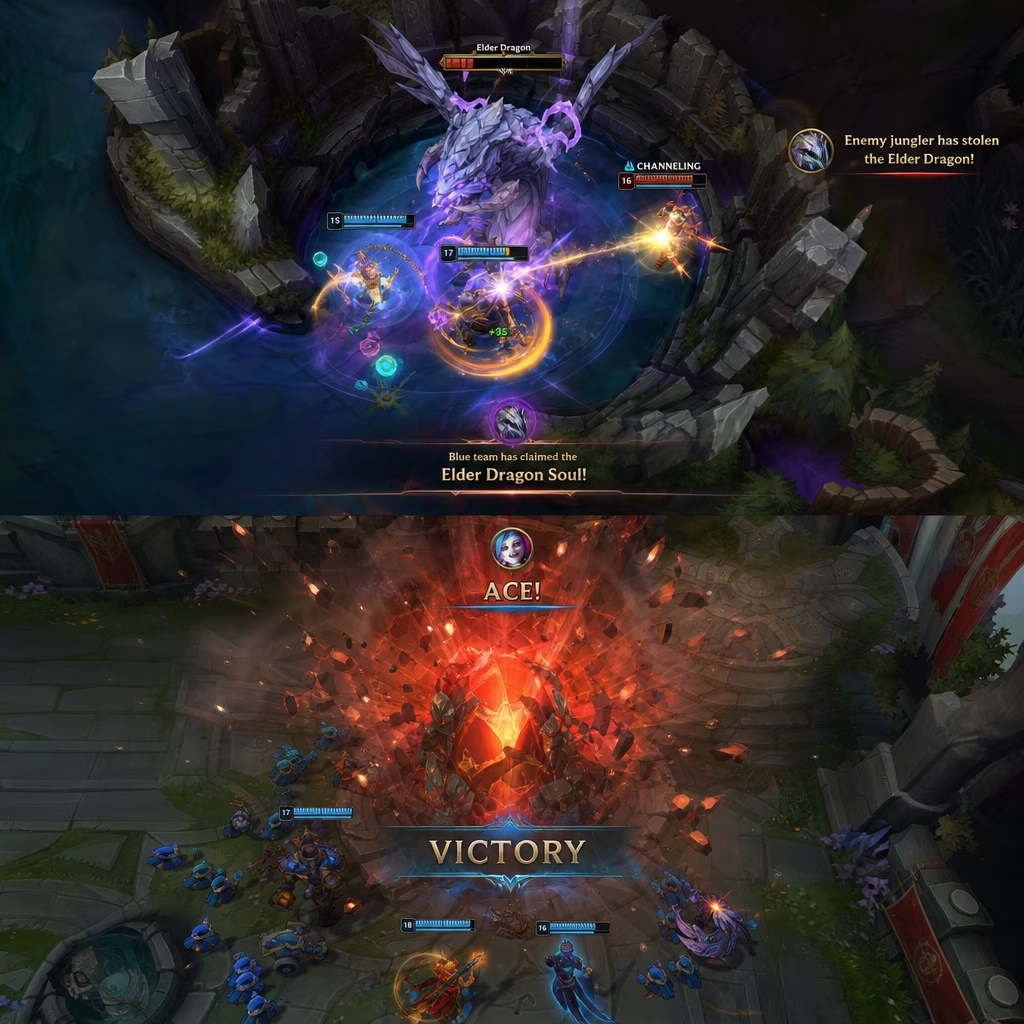
The original vision for Clash was ambitious. Riot Games wanted to create a tournament space inside League of Legends that rewarded coordination, preparation, and social play. Players would not simply queue alone and hope for a functional team. They would assemble a roster, plan around a schedule, and step into a bracket with familiar names on the other side. The scouting period added tension and strategy. It also made the mode feel personal. For many players, that promise was more exciting than another temporary game mode because it touched the core social experience of League of Legends.
That promise collided with reality when Clash was scheduled for its first worldwide debut. The launch failed badly. Riot had to scrap the rollout completely and return to the laboratory. The problem was not merely a small bug or a brief delay. The mode needed to function across every region, and that requirement exposed how difficult a global tournament system could be. Servers, schedules, brackets, and player behavior all had to align. The failure became a cautionary tale about ambition and infrastructure. It also left players skeptical, even as they continued to ask for Clash's return.
Now the mode is back on the PBE for testing. Riot is examining several parts of the system in the coming weeks, with attention on what is happening under the hood. That phrase matters. A tournament mode can look simple on the surface: teams enter, matches happen, a winner advances. Beneath that surface, however, are layers of matchmaking, scheduling, server stability, and regional readiness. The PBE period is not a victory lap. It is a stress test for the systems that failed before and for the assumptions that have been rebuilt since.
| Feature | Description |
|---|---|
| Team size | Five players, built around four friends and one organizer |
| Format | Tournament-style bracket with advancement |
| Scouting | A pre-match phase for reading the opposing team |
| Atmosphere | A local-event feel rather than a standard queue |
| Current status | Back on the PBE for focused testing |
The testing phase is likely to focus on practical questions. Can teams form and lock in without friction? Do brackets populate correctly across different regions and time windows? Does the scouting phase create meaningful preparation without slowing the event down? Can the mode handle the load when many players arrive at once? These questions are less glamorous than a cinematic trailer, but they decide whether Clash can survive a real launch. Riot's earlier failure showed that enthusiasm alone cannot carry a global mode. The infrastructure has to be ready before the bracket can become a reliable experience.
For players, the return of Clash is a mix of excitement and caution. The mode offers something that ranked play often lacks: a shared objective among friends, a clear bracket, and a sense of occasion. It also creates a different kind of pressure. A loss in a tournament bracket feels more consequential than a loss in a solo queue game, even when the stakes are cosmetic or competitive rather than professional. That pressure can be thrilling. It can also reveal the importance of fair matchmaking and clear communication. If teams are mismatched or schedules collapse, the local-tournament feeling disappears quickly.
The broader context of 2026 makes the PBE test especially important. League of Legends players have more competitive options than ever, and they expect modes to respect their time. A tournament system must be stable, readable, and worth planning around. It cannot rely on nostalgia for a feature that never had a clean worldwide debut. Clash has to prove that the lessons from its failed launch were absorbed. The PBE is the right place for that proof because it allows Riot to observe real behavior without exposing every region to another broken rollout.
Riot's approach appears measured. The company is not presenting the PBE return as a final victory. It is testing several elements in the coming weeks and watching how the system behaves under controlled conditions. That caution is appropriate. Clash was once a symbol of what League of Legends could offer beyond standard matches. Then it became a symbol of how difficult global features can be. Now it has a chance to become something more durable: a tournament mode that works, feels social, and gives friends a reason to organize around a bracket again.
The return to the PBE is therefore more than a technical checkpoint. It is a test of trust. Players remember the failed debut, and they will judge the mode by how it performs rather than by how it is described. If the testing period produces stable brackets, sensible scheduling, and a scouting phase that enhances the event, Clash could reclaim its original promise. If not, the mode will remain a reminder that ambition in game design must be matched by execution. For now, Clash is back on the testing grounds, and the bracket is waiting to be proven.