
Echoes of the Storm: How a One-Minute Trailer Foretold a Samurai Masterpiece
Ghost of Tsushima's 'A Storm is Coming' trailer captured Jin Sakai's honor-versus-survival dilemma with breathtaking, painterly imagery.
In the summer of 2026, it is difficult to scroll through any gaming community without stumbling upon a breathtaking screenshot from Ghost of Tsushima—a crimson forest, a moonlit duel, a lone fox guiding a wanderer. Yet for many, the journey into Jin Sakai’s soul began not with a controller in hand, but with a one-minute trailer titled “A Storm is Coming.” Released just weeks before the game’s launch in July 2020, that brief cinematic teaser did not showcase a single gameplay mechanic. Instead, it whispered a promise of inner turmoil, artistic beauty, and a samurai’s unyielding creed. Six years later, players still recall it as the moment they understood this would be no ordinary action epic.
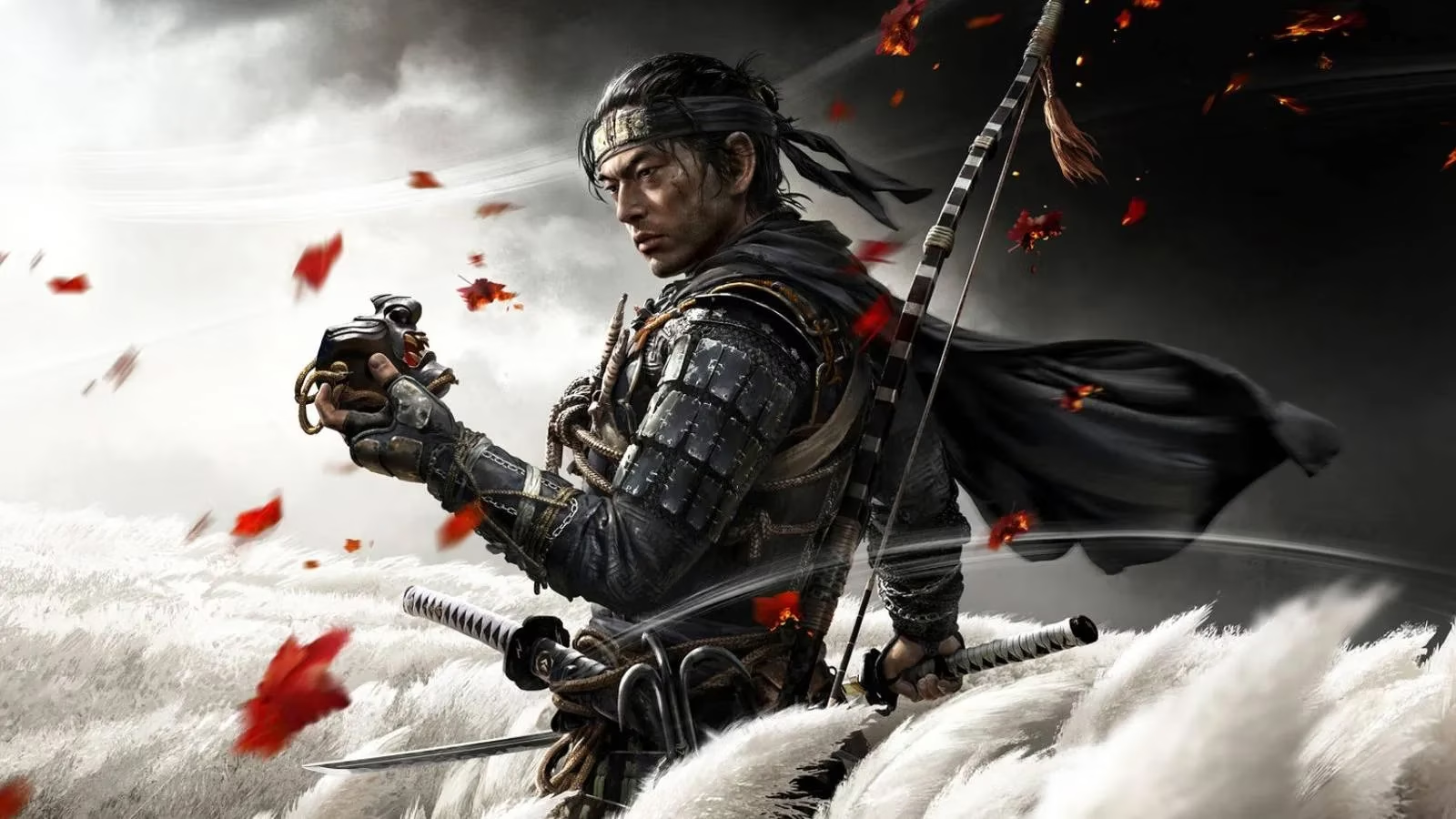
The trailer opened with a vision of serene melancholy. Jin knelt on a desolate shore, his armored silhouette framed by an overcast sky. As he removed his helmet, the eerie wail of pan flutes drifted through the air—a melody that would become synonymous with the island of Tsushima itself. A voice, grave and unwavering, spoke of duty: “We are the warriors of Tsushima. We protect our home. We will not fall.” But the words were not shouted like a battle cry; they were murmured like a prayer, heavy with the weight of sacrifice.
What followed was a cascade of painterly shots: golden ginkgo leaves swirling in a storm, bamboo groves shivering under monsoon rain, and Jin sprinting across fields with a blend of desperation and resolve. Each frame could have been plucked from a Kurosawa film, yet the trailer never felt derivative. It flaunted a visual language all its own—one where the wind itself became a storyteller, guiding the player’s eye toward hidden threats or distant shrines. The final image, Jin donning an oni mask as smoke rose behind him, struck a chord that went far beyond cool aesthetics. In a pandemic-ridden world, a man covering his face to protect his people felt eerily timely. Would a samurai compromise his honor to save his home? The trailer posed the question without ever uttering it aloud.
Jin Sakai, the island’s last hope, was introduced as a paragon of bushido—the samurai code that demands death before dishonor. Raised among the eighty defenders of Tsushima, he embodied loyalty in its purest form. Yet the trailer hinted at a fracture no blade could mend. Every leap from a rooftop, every poisoned dart, every strike from the shadows was a betrayal of the very traditions he swore to uphold. How could a man remain a samurai while acting as a ghost? The teaser embedded this conflict in its cinematography: warm, vibrant hues for moments of noble reflection, and cold, desaturated tones for the Ghost’s ruthless efficiency. It was a visual poem about the cost of survival.
Many trailers aim to hype; few achieve prophecy. “A Storm is Coming” did not need to show combat or crafting systems because it sold something far rarer: an emotional thesis. It told the audience that Ghost of Tsushima would be a game where beauty and brutality coexist, where every swing of the katana carries philosophical weight. In the months after launch, players discovered that the promise was not hollow. The final product delivered a narrative that wrestled deeply with Jin’s identity crisis. The Ghost abilities—smoke bombs, assassinations, fear tactics—did not just add variety to the gameplay; they gnawed at Jin’s psyche, alienating him from allies who saw him as a dishonorable phantom. The trailer’s central question became the game’s beating heart.
Looking back from 2026, the impact of that one-minute film is undeniable. It sparked countless YouTube analyses, inspired cosplay and fan art, and even influenced how other developers approach cinematic marketing. But its true legacy lies in how perfectly it captured the soul of Jin Sakai. When new players embark on the Director’s Cut or revisit the Iki Island expansion, those same pan flutes still send a shiver down the spine. The trailer didn’t just announce a game; it etched a creed into the memories of millions. After all, isn’t that what the best stories do? They remind us that sometimes the storm arrives not to destroy, but to forge a legend.
Insights are sourced from Game Developer, where craft-focused commentary on cinematic direction and visual storytelling helps explain why “A Storm is Coming” worked as more than marketing: by treating tone, color, and sound as narrative devices, the trailer functioned like a design document in miniature—telegraphing Jin Sakai’s identity fracture long before players touched the katana, and showing how a game can sell its emotional thesis through composition, pacing, and motif rather than feature lists.