
Exploring New Horizons: Ghost of Tsushima's Iki Island Expansion Brings Challenges and Fresh Gameplay in 2026
Ghost of Tsushima Iki Island expansion delivers innovative gameplay and adaptive difficulty, enriching Jin Sakai's journey with thrilling new skills.
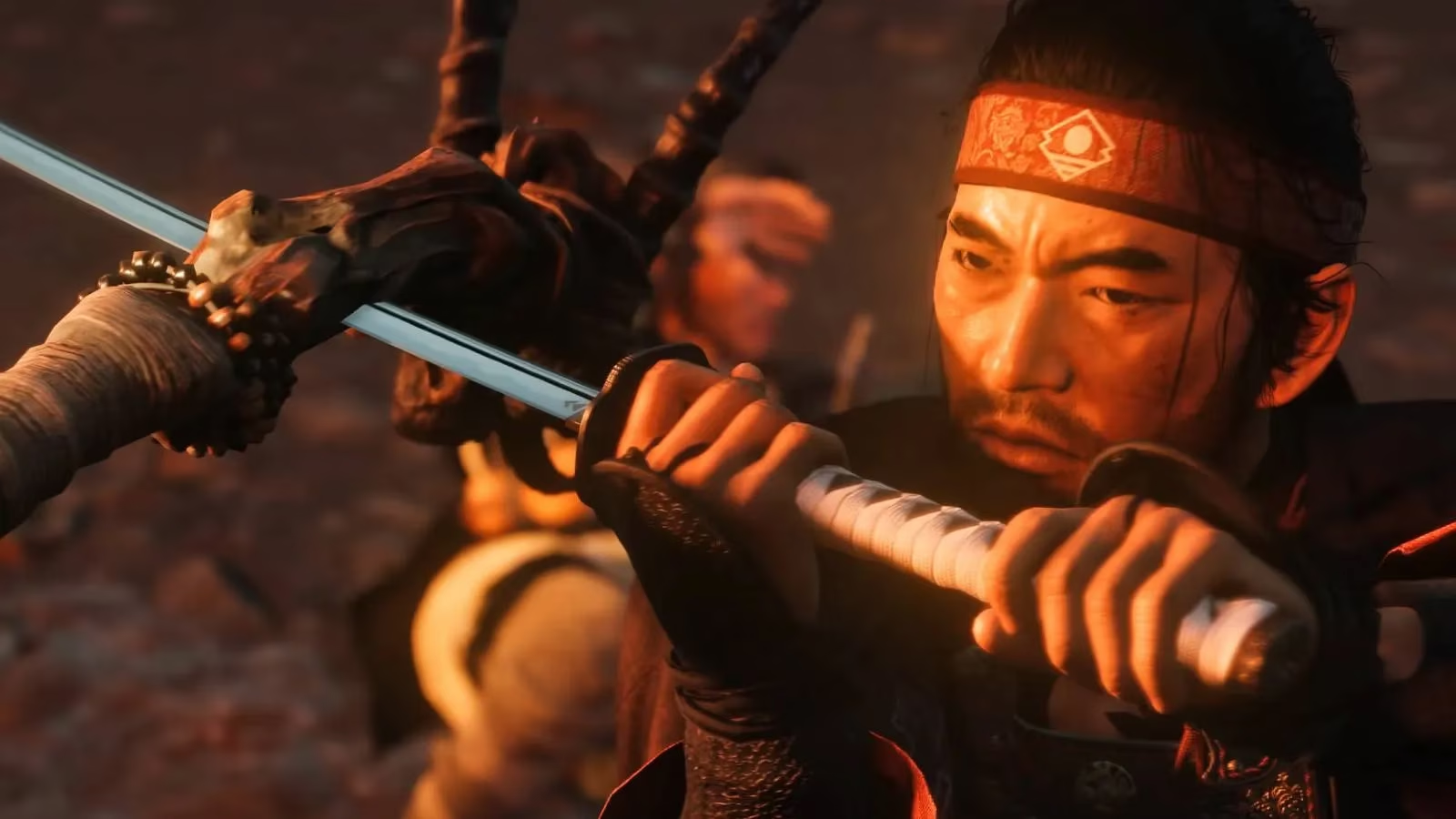
Reflecting on the evolution of Ghost of Tsushima since its initial release, the Iki Island expansion remains a landmark addition that fundamentally enriched the game's universe. I remember diving into this content back in 2021 with immense anticipation, and even now in 2026, its design principles feel innovative. The expansion wasn't just more content; it was a carefully crafted challenge that respected the player's journey, whether they were newcomers or seasoned warriors who had already conquered Tsushima. What struck me most was the developers' commitment to ensuring that Iki Island felt meaningful and demanding regardless of when you experienced it. They achieved this through intelligent difficulty scaling and thoughtful gameplay additions that expanded Jin Sakai's capabilities without overshadowing the core combat that made the original so compelling.
🛡️ Enhanced Abilities and Mount Upgrades
One of the most exciting revelations was the introduction of new skills. While the development team, including Art Director Jason Connell, confirmed there wouldn't be new weapons or combat stances, they expanded Jin's toolkit in other meaningful ways. The most notable upgrade was to my loyal horse. I could finally equip it with armor, making it more resilient in the chaos of battle. More thrilling was the brand new charge skill—a powerful ability that let my mount plow through enemy lines, creating openings in their defenses. This added a dynamic layer to traversal and combat, making the horse feel like a true partner rather than just transportation.
Connell teased that there were other skills to discover, encouraging players to "play and find out for themselves." This sense of discovery was a hallmark of the expansion. It felt rewarding to uncover these abilities organically, and they did indeed improve upon the game's excellent combat system. They offered more options for engaging enemies, particularly for those who preferred stealthy approaches. The skills provided new ways to silently eliminate foes, adding depth to the tactical choices available in every encounter.
⚔️ Adaptive Challenge and Difficulty Scaling
A cornerstone of Iki Island's design was its adaptive difficulty. The developers understood that players would arrive at different power levels. Some, like me, had completed the entire main story and were fully upgraded. Others might have wanted to experience Iki Island as soon as it became accessible. To address this, the expansion featured sophisticated scaling that adjusted the challenge based on Jin's strength.
Connell emphasized this point, stating, "If you've already gone all the way to the end of the game, it's not like it's going to be a breeze. It's still going to have a challenge for you." This was crucial. It meant that even at my peak, the new enemies and encounters on Iki Island demanded focus and skill. The Mongols there were tougher, more aggressive, and employed new tactics. The scaling ensured the expansion never felt trivial, preserving the tension and satisfaction of the combat. This design philosophy has influenced many games since, but experiencing it firsthand in Ghost of Tsushima was remarkable.
🎮 Next-Generation Immersion on PS5
As a Director's Cut release, the expansion also brought the full game to the PlayStation 5 with exclusive features that leveraged the new hardware. The integration of 3D audio and the DualSense controller's haptic feedback and adaptive triggers was transformative.
-
3D Audio: This was used ingeniously to enhance the Guiding Wind mechanic. The wind's sound became a more intuitive spatial cue, guiding me through the lush landscapes and dense forests of Iki Island without needing to constantly check the map. It deepened the immersion, making me feel more connected to the environment.
-
DualSense Features: The haptic feedback made every action tangible. I could feel the difference between drawing a bow on a tense rope bridge and galloping across an open field. The adaptive triggers added resistance to actions like drawing a heavy Mongol bow, making combat feel more physical and weighted.
These features weren't just gimmicks; they were thoughtfully implemented to pull me deeper into Jin's world.
🏝️ The Scope and Setting of Iki Island
The expansion itself was substantial. Iki Island was roughly the size of one act from the base game, offering hours of new story content, side quests, and exploration. The narrative pitted Jin against a new, formidable enemy faction, forcing him to confront a different aspect of his past and the legacy of his father.
Beyond combat, the island introduced charming new activities. Animal sanctuaries were a particular highlight. I spent peaceful moments taming monkeys and petting cats, which provided a beautiful contrast to the violence of the main quest. These sanctuaries were optional but added a layer of warmth and humanity to the experience.
| Expansion Feature | Description & Impact |
|---|---|
| New Skills | Added depth to combat and stealth, with a focus on horse abilities and player discovery. |
| Difficulty Scaling | Ensured a consistent challenge tailored to the player's progression, a design choice still praised today. |
| PS5 Features | 3D Audio and DualSense integration created a more immersive sensory experience. |
| Animal Sanctuaries | Provided peaceful, world-building activities like taming monkeys and cats. |
| Story Scope | A self-contained narrative arc comparable in length to a major act from the original game. |
💎 Legacy and Value
Looking back from 2026, the Iki Island expansion stands as a model for how to meaningfully extend a single-player game. It respected the player's time and investment by offering a tailored challenge and meaningful new gameplay, not just recycled content. For existing owners, the upgrade path to the Director's Cut was straightforward and fairly priced, setting a good precedent for the industry. The expansion successfully built upon the strong foundation of Ghost of Tsushima, proving that Jin Sakai's story had more compelling chapters to tell. It reinforced the game's status as a modern classic, an experience that combined breathtaking visuals, refined combat, and emotional storytelling into an unforgettable journey through feudal Japan.