
Ghost of Tsushima’s Exploration-First Design Still Rewards Players in 2026
Ghost of Tsushima exploration and open-world design offer elegant, immersive gameplay, rewarding players with diverse skills and weapons.
I remember watching that Ghost of Tsushima State of Play presentation and feeling genuinely surprised by what the developers were promising. Not because of the combat or the samurai fantasy, but because of the exploration. Sucker Punch chose to remove the usual open-world clutter. No constant minimap, no endless waypoint markers. In their place came the wind, golden birds, foxes, and smoke rising on the horizon. That decision still feels bold in 2026.
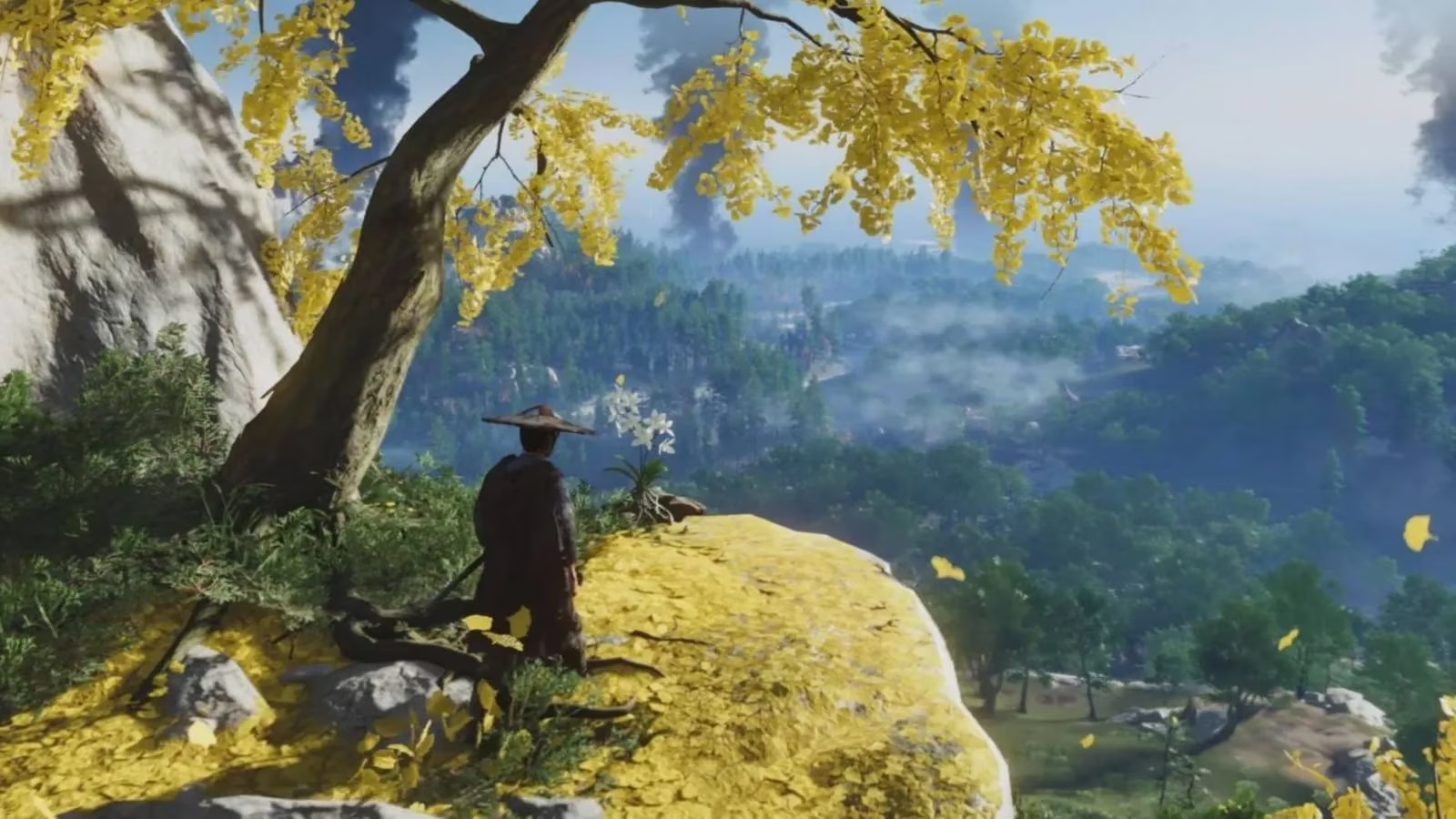
As a player who has spent hundreds of hours in open-world games, I have learned to expect a certain rhythm. You open a map. You see dozens of icons. You pick a destination. You fast travel. You clear an activity. Repeat. Ghost of Tsushima broke that rhythm. The island of Tsushima asks you to look at the environment instead of a compass. A fox can lead you to a hidden shrine. A golden bird might guide you toward a hot spring. A distant pillar of smoke might be a Mongol camp worth raiding. Even in 2026, after many open-world releases have borrowed from that playbook, the original still feels elegant.
Game director Nate Fox explained the thinking in an interview with Press Start Australia. He said exploring the game would greatly benefit players by producing weapons, skills, and many other things that the main story will not. I remember that interview because it made the design philosophy clear: exploration is not an optional chore. It is a second progression path.
Fox said: "if you go on Jin’s journey from Samurai to Ghost, you’ll get access to some abilities and some weapons but if you really want the full diversity of possibilities, you have to explore." He added: "We want to make sure that if you take the time, you get something from it that allows you to modify the play style to get more diversity."
That quote still captures why Ghost of Tsushima felt different. The main story gives you a complete core kit, but exploration unlocks the kind of variety that makes repeat playthroughs feel fresh. It is not just about collecting trinkets. It is about changing how Jin fights, moves, and survives.
Let me break down the difference between focusing only on the story and taking your time with the island.
| Playstyle | Likely rewards | Overall experience |
|---|---|---|
| Main story only | Core katana techniques, a few Ghost weapons, key armor sets | Focused but narrower combat options |
| Exploration focused | Extra weapons, hidden skills, charms, armor upgrades, side quests | More diverse builds and playstyles |
A secondary detail from that interview has stayed with me. When asked if players might miss quests and weapons by not exploring, Fox confirmed that will be the case. I appreciate that honesty. Not every open-world game commits to letting players miss meaningful content. Some games bend over backward to keep every reward accessible. Ghost of Tsushima does not. The development team embraced freedom. You can ignore entire side stories, miss powerful techniques, and still finish Jin's journey. But by doing so, you leave a large part of the game undiscovered. The main story is perfectly acceptable on its own, but the island rewards curiosity.
The comparison to The Witcher 3: Wild Hunt is useful here. In that game, players who explored every nook and cranny found extra Witcher school gear, monster contracts, and side quests that changed how they approached combat. Players who rushed the main story missed a lot of that depth. Ghost of Tsushima follows a similar formula, and the result is the same. The side content is not filler. It often gives you tools that alter your play style. A charm might push a stealth build into a terror build. A mythic combat art might transform how you duel. That is the kind of reward that makes exploration feel worthwhile.
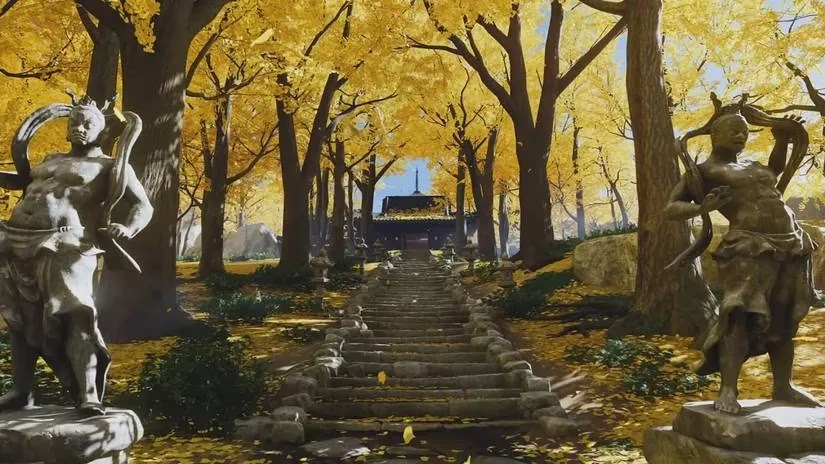
Six years after its original PS4 launch, Ghost of Tsushima remains a benchmark. The Director's Cut and PC release introduced the game to a new audience, and Iki Island added even more reasons to wander off the main path. In 2026, I still think about the wind-based navigation when I play newer open-world games that clutter their maps. The lesson is simple. If you want players to explore, you have to make exploration feel like discovery, not administration. Ghost of Tsushima achieved that, and its rewards proved the point.
For anyone returning to the game in 2026, my advice is the same one I would have given in 2020: get lost on purpose. Follow the fox. Chase the bird. Investigate the smoke. The main story will wait for you. The island will not.