
Ghost of Tsushima’s Record-Breaking Sales and Enduring Legacy in 2026
Ghost of Tsushima and PlayStation 4 redefined action games, blending samurai storytelling with stunning visuals and record-breaking sales.
When Ghost of Tsushima first arrived on the PlayStation 4 in July 2020, few could have predicted just how seismic its impact would be. Launched in the dying days of a console generation, Sucker Punch Productions’ samurai epic immediately carved out a place in gaming history. Within three days of release, the title had shifted an astonishing 2.4 million copies worldwide. That figure not only cemented its status as a commercial powerhouse but also earned it the title of PlayStation’s fastest-selling new intellectual property. Horizon Zero Dawn, the previous record holder, took two full weeks to reach 2.6 million units. Ghost of Tsushima effectively rewrote the rulebook on what a new franchise could achieve.
The game’s narrative transported players to the thirteenth century, during the first Mongol invasion of the Japanese island of Tsushima. Players assumed the role of Jin Sakai, a young samurai torn between the rigid code of honor he was raised to uphold and the brutal necessities of guerrilla warfare. Forced to adopt stealth tactics and unconventional weapons, Jin’s journey from noble warrior to the feared “Ghost” formed the emotional backbone of an already unforgettable experience. It was a tale of sacrifice, identity, and the blurring line between hero and legend.
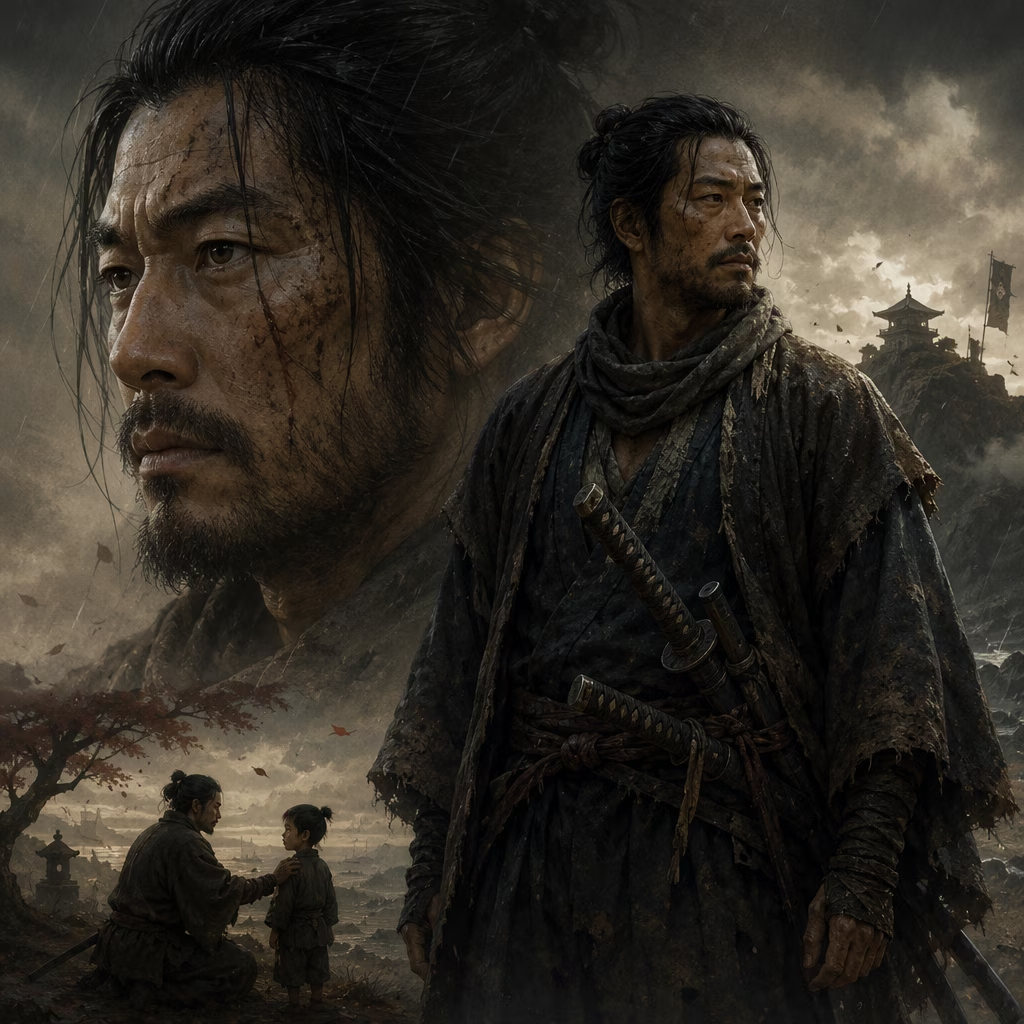
What truly set Ghost of Tsushima apart, however, was the way it married its storytelling with breathtaking artistry. The island itself became a character—vast fields of pampas grass swayed in the wind, crimson maple leaves drifted across ancient temples, and sunsets bathed the landscape in hues of gold and lavender. Combat, too, felt like a dance. The katana strikes were precise and lethal, demanding timing and rhythm rather than brute force. A dedicated “black and white” Kurosawa Mode, complete with film grain and Japanese audio, paid homage to the samurai cinema that inspired the entire project. Critics and players alike praised the title as a masterclass in marrying gameplay with atmosphere.
In the years following that explosive debut, the legacy of Ghost of Tsushima only expanded. A Director’s Cut arrived in August 2021, bringing with it the Iki Island expansion that delved deeper into Jin’s past and confronted the trauma buried in his psyche. The upgrade also showcased the power of the PlayStation 5 with haptic feedback, adaptive triggers, and drastically reduced load times. By the time the Director’s Cut made its way to PC in May 2024, the game had already surpassed 10 million copies sold globally—a testament to its enduring appeal. The PC port unlocked framerate options, ultrawide support, and extensive customization, introducing a whole new audience to Tsushima’s windswept shores.
Even in 2026, the game continues to resonate. Its influence can be seen in the surge of historically grounded action titles that followed, each one chasing the same marriage of elegance and brutality that Sucker Punch perfected. The studio’s careful attention to cultural detail—hiring historians, conducting field research in Japan, and collaborating with native speakers—paid off in ways that transcended mere sales figures. Ghost of Tsushima became a cultural bridge, sparking renewed interest in the samurai genre and even boosting tourism on the actual island of Tsushima.
The multiplayer mode, Legends, also deserves special mention. Originally released as a free post-launch update, it transformed the solitary journey of Jin into a supernatural co-op experience filled with myths, demons, and class-based combat. The mode attracted a dedicated player base, and by 2026 it stands as one of the most cherished cooperative offerings in Sony’s first-party catalog. Its success, combined with the single-player campaign’s longevity, ensured that Ghost of Tsushima remained a topic of conversation long after the credits rolled.
Throughout its six-year journey so far, Ghost of Tsushima has collected numerous Game of the Year awards and nominations, including high honors at The Game Awards and D.I.C.E. Awards. The soundtrack, too, earned widespread acclaim for its fusion of traditional Japanese instrumentation and modern orchestration. Every element—from the wind-guided navigation system to the delicate composition of haiku—reflected a development team operating at the peak of its creativity. The game’s commercial and critical triumph was not a fluke; it was the result of a clear vision executed with unwavering discipline.
Looking back from 2026, the sales milestone of 2.4 million copies in three days remains a remarkable footnote, but only a footnote. The true measure of Ghost of Tsushima’s success lies in its ability to endure. It became a benchmark for new IPs, a beloved piece of art that players return to season after season, and a shining example of how video games can honor history while crafting something entirely new. With rumors of a sequel or film adaptation refusing to die down, the saga of the Ghost is far from over. For now, Jin Sakai’s winds still guide millions of travelers across that beautiful, war-torn island, and the record books will forever note the moment a lone samurai shattered every expectation.
| Milestone | Date | Details |
|---|---|---|
| Initial Release | July 2020 | PS4 launch, fastest-selling new IP (2.4 million in 3 days) |
| Legends Mode | October 2020 | Free co-op multiplayer expansion |
| Director’s Cut | August 2021 | Iki Island expansion, PS5 enhancements |
| PC Launch | May 2024 | Full port with tech upgrades, new audience reached |
| Lifetime Sales | 2024 | Crossed 10 million copies globally |
| Cultural Impact | Ongoing | Tourism boosts, genre influence, awards accumulation |