
How Ghost of Tsushima's 1.1 Update Unleashed Legends and a New Game+ Saga
Ghost of Tsushima's 1.1 update adds cooperative Legends mode and New Game+, bringing multiplayer and replayability to the acclaimed samurai epic.
The crisp autumn air of 2020 carried a whisper across Tsushima Island. It was a promise, a spark that would ignite the souls of samurai everywhere. On October 16, 2020, Sucker Punch Productions opened a new chapter in their already-legendary tale, releasing the Version 1.1 update for Ghost of Tsushima entirely free of charge. The announcement, which had arrived just over a week prior, sent waves of excitement through a community still basking in the golden light of Jin Sakai's journey. A brand-new trailer accompanied the news, peeling back the curtain on two monumental additions: the cooperative multiplayer experience called Ghost of Tsushima: Legends, and a deeply requested New Game+ mode.
For months, players had roamed the windswept fields and blood-soaked battlefields of Tsushima alone, mastering the way of the katana as the honorable Jin Sakai. The game had been celebrated as one of the finest PS4 exclusives ever created, its gorgeous aesthetics and fluid combat praised in countless reviews. But Sucker Punch was not content to rest on their laurels. They listened. The community had longed for two things: a way to test their skills alongside friends, and a reason to relive the epic story with new challenges. The 1.1 update delivered both, and the world took notice.
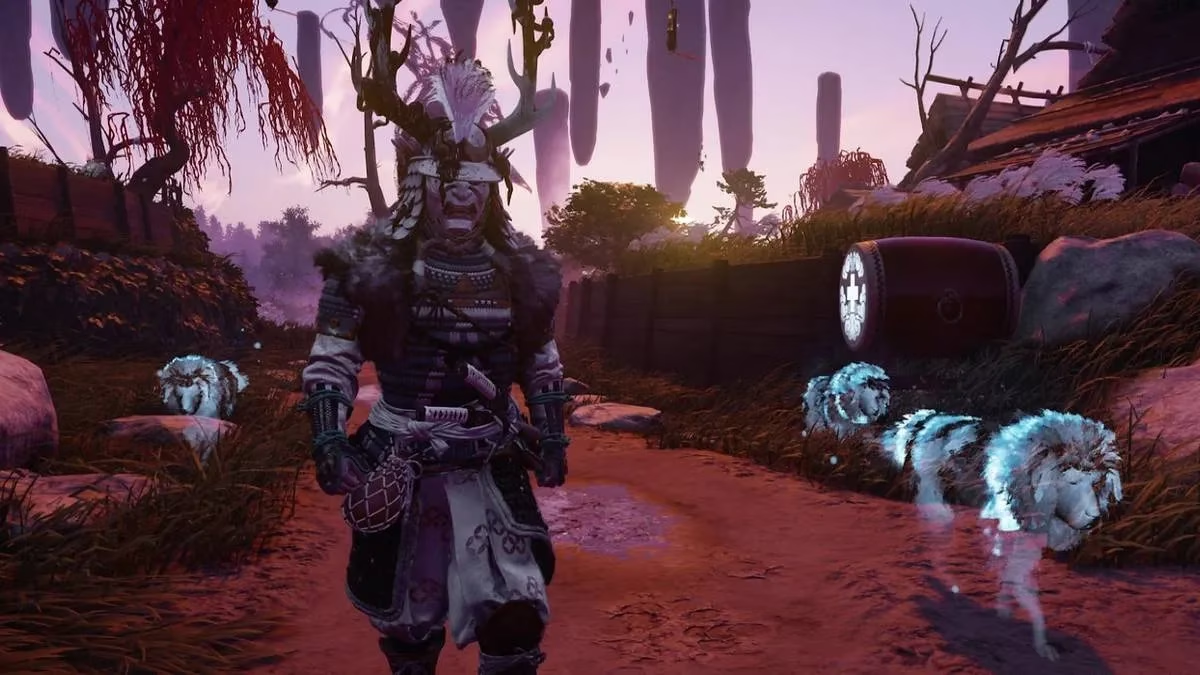
Darren Bridges, a senior game designer at Sucker Punch, stepped forward on the PlayStation Blog to share the details with a hungry audience. He unveiled Ghost of Tsushima: Legends, a separate multiplayer mode that would exist apart from the main single-player campaign but draw from its spirit. This was no simple add-on; it was a gift filled with mystical echoes and cooperative heroics. Legends would offer two distinct experiences: four-player survival missions where waves of enemies descended upon a team, and two-player story missions that wove narrative threads requiring tight teamwork. Every slash, every parry, every perfectly timed dodge now carried the weight of shared triumph.
The trailer showed spectral masks, flaming swords, and silhouettes moving in silent unison. It was clear that Sucker Punch had not only borrowed from the cooperative giants of the era but had also injected their own unique spin, transforming historical fiction into a supernatural dance. The online community erupted. Forums buzzed with strategies, fan art depicting legendary warriors flooded social media, and veterans who had long since sheathed their blades began sharpening them once more.
But the single-player faithful were not forgotten. The same update introduced New Game+, a feature that had been clamored for since launch. To make replaying the tale of Jin Sakai feel fresh rather than repetitive, Sucker Punch cleverly wove a new currency into the fabric of Tsushima: Ghost Flowers. These ethereal tokens could be earned by completing Tales and activities a second time and spent at a brand-new merchant. The mysterious vendor, known as the Ghost Flower merchant, offered exclusive dyes and vanity gear found only in New Game+. Suddenly, every bamboo strike, every haiku spot, and every fox den became an opportunity for discovery all over again.
Imagine a player, let’s call him Kenji, who had finished the game months earlier. He had liberated every farmstead, collected every banner, and even earned the platinum trophy. When news of the free update hit, he felt a pull he couldn’t resist. On October 16, he downloaded the patch, his heart racing. First, he dove into New Game+, noticing immediately how the Ghost Flower system changed his approach. He no longer ignored side quests; he hunted them. The new crimson dye for the Sakai clan armor became his obsession. Then, he ventured into Legends with two friends and a random fourth warrior. The four-player survival mission on the shores of Iki tested their communication like nothing before. They failed three times, then finally triumphed as a rain of flaming arrows lit the sky. That night, Kenji didn't sleep. He simply played, lost in the magic of a game that refused to stop giving.
Sucker Punch's decision to make the update free was a masterstroke of goodwill. In an industry often criticized for nickel-and-diming players, this approach felt like a warm bow. It also came at a strategic moment. The holiday season was around the corner, and talk of the upcoming PlayStation 5 dominated headlines. While rumors swirled that Ghost of Tsushima might find a new home in the PS5 generation, either through an enhanced port or a full sequel, the development team showed unwavering loyalty to the PS4 faithful. They understood that many would not immediately leap to the new console, and they wanted to ensure that Tsushima remained a vibrant, living world.
The impact was immediate and measurable. Player counts surged. Ghost of Tsushima sales received a noticeable bump heading into December, as the promise of even more content lured those who had been waiting on the fence. The game, already regarded as an instant classic, now felt like an ever-expanding epic. The 1.1 update didn’t just add modes; it deepened the legend.
Looking back from the vantage point of 2026, that October release stands as a defining moment in live-service generosity. Ghost of Tsushima: Legends paved the way for years of community events, developer-supported tournaments, and eventually, the standalone Legends expansion that would arrive later. The New Game+ mode, with its clever Ghost Flower economy, became a template for how single-player titles could breathe new life into old adventures. Sucker Punch had shown that a game’s journey could extend far beyond its credits, not through microtransactions or paid passes, but through the simple, powerful art of giving.
As the cherry blossoms fall on Tsushima even now, the echoes of that 1.1 update still resonate. It was a reminder that the greatest stories are never truly finished—they simply wait for the right storytellers to add a new verse.