
How Ghost of Tsushima's Patch 1.07 Saved My PS4 Controller from Drift Doom
Ghost of Tsushima stick drift fix: Update 1.07's control stick tolerance slider revives gameplay for PS4 players with aging controllers.
I still remember that evening in 2026, settling into my worn leather couch, the familiar amber glow of Tsushima’s title screen flickering on my aging PS4. My hands wrapped around the DualShock 4, its thumbsticks polished smooth by countless hours of guiding Jin Sakai through dense forests and moonlit duels. But lately, something was wrong. Every time I tried to line up a perfect standoff, Jin would start to wander. The wind wouldn’t guide me—my controller did, and it was steering me off cliffs. Stick drift. The bane of every seasoned gamer’s existence, creeping in like a slow poison that ruins your muscle memory.
For weeks, I’d been battling it. A delicate parry against a spear-wielding Mongol would turn into a clumsy dodge because the camera kept panning left. I’d unsheathe my katana to challenge a ronin, only to watch Jin awkwardly shuffle in a circle. It was heartbreaking. Ghost of Tsushima isn’t just a game; it’s a meditation. The brush of tall grass, the whisper of guiding foxes, the precise timing of a perfect counter—all of it shattered because of a tiny hardware defect. I considered retiring my trusty controller, but a new one was hard to find, and this one held too many memories. Then, while scrolling through old patch notes (yes, I’m that person who reads them when desperate), I stumbled upon a beacon of hope: Update 1.07.
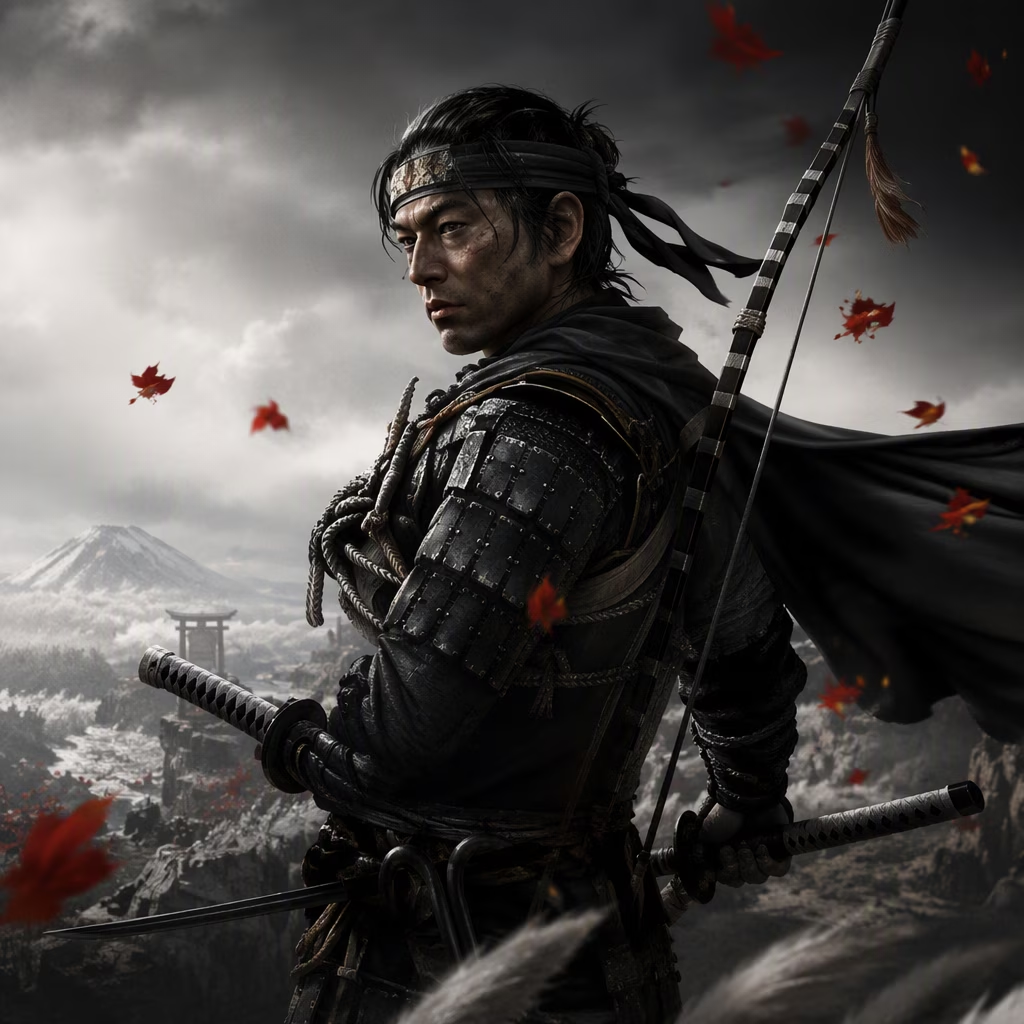
At first glance, the patch seemed minor. A few bug fixes, general stability improvements—nothing that would make headlines. But nestled among the notes was a line that made my heart skip: “Added an option to adjust control stick tolerance.” I had no idea what that meant at the time, but I dove into the menus. And there it was, a simple slider in the accessibility settings, promising to let me define how much my thumbstick needed to move before the game registered any input. It was a deadzone adjustment, they called it. A deadzone is that tiny, neutral area where small nudges are ignored so that your character doesn’t twitch at every breath. When your controller gets old, that zone can shrink or wobble, causing ghost movements. Being able to widen it manually was like receiving a gift from the gods of Sakai.
I spent the next hour fine-tuning it. At first, I went too far and Jin felt sluggish, barely responding to gentle pushes. Then I dialed it back, finding the sweet spot where my drifting left stick would finally stay still while I held a bowstring taut. The difference was immediate and profound. I launched the game and stood on the edge of Komoda Beach, waiting. No drift. I walked forward in a perfectly straight line for the first time in weeks. I wept a little—or maybe that was the sea spray. From that moment, every duel, every haiku moment, every silent assassination flowed with the precision I had lost. The setting didn’t just fix my controller; it resurrected my journey through Iki Island, which I’d put off precisely because of the drift.
But Update 1.07 wasn’t just about stick tolerance. The patch notes listed other quiet improvements that I came to appreciate. A handful of minor quest bugs were squashed, the kind where a non-playable character would get stuck or a collectible wouldn’t register. The photo mode got a tweak or two, making my endless screenshots of vibrant autumn leaves even more shareable. Under the hood, stability was reinforced, reducing those rare but jarring crashes that could happen after long sessions. None of it was flashy, but together they polished an already gleaming gem. Sucker Punch could have just moved on to the sequel or their next project, but they took the time to care for players still roaming Tsushima. And for those of us clinging to aging hardware, it was a masterstroke of empathy.
I remember thinking about how many games simply ignore controller issues. Developers often assume you’re playing with pristine peripherals on the latest console. But real life is messy. Controllers age, dust settles, springs weaken. The ability to compensate for that inside a game’s own settings felt revolutionary, even years later. I've since recommended it to every friend who complains about stick drift in any title, even though this feature is specific to Ghost of Tsushima. The patch became a permanent part of my pre-game ritual: load up, check the tolerance slider, and ensure my own piece of ancient tech could still channel the ghost.
Now, in 2026, I’m still playing. The PS5 has long since succeeded its predecessor, but my PS4 remains a dedicated Ghost of Tsushima machine. The disc hasn't left the drive in months. I return to the game when life gets loud, using the wind and the comforting absence of drift to find a center. Update 1.07, small as it was, gave me back that serenity. It taught me that a patch doesn't need new armor sets or massive overhauls to change a player's experience. Sometimes, the most vital fixes are the ones that let you simply walk in a straight line again. So if you’re out there, battling a spastic thumbstick and ready to abandon a masterpiece, dig into those accessibility options. You might just find the same salvation I did, waiting beneath a tiny version number.
What Update 1.07 brought to the table:
-
🎮 Control stick tolerance slider to combat drift and deadzone issues
-
🐛 Fixed multiple minor quest bugs and NPC pathfinding quirks
-
📸 Photo mode refinements for even more stunning captures
-
🧱 General stability improvements to prevent occasional crashes
-
⚙️ Under-the-hood optimizations for smoother performance on base PS4
Sucker Punch didn’t just release a game; they nurtured it. And in 2026, that’s something worth celebrating every time the wind calls.