
K/DA's Epic Comeback: How 'THE BADDEST' Reignited a Virtual Music Revolution
K/DA's 2020 return with 'THE BADDEST' teased new skins and reignited the virtual K-pop frenzy, leveraging Riot's music partnership.
There’s something irresistible about a perfect comeback story, and in 2020, League of Legends players got exactly that. While the world outside was dealing with a chaotic year, Runeterra was quietly gearing up for one of its biggest cultural moments. The virtual K-pop girl group K/DA had been silent for nearly two years, but that August, a single tweet changed everything. For fans who had looped “POP/STARS” hundreds of millions of times, the wait was finally over—and the excitement hasn’t really cooled off since.
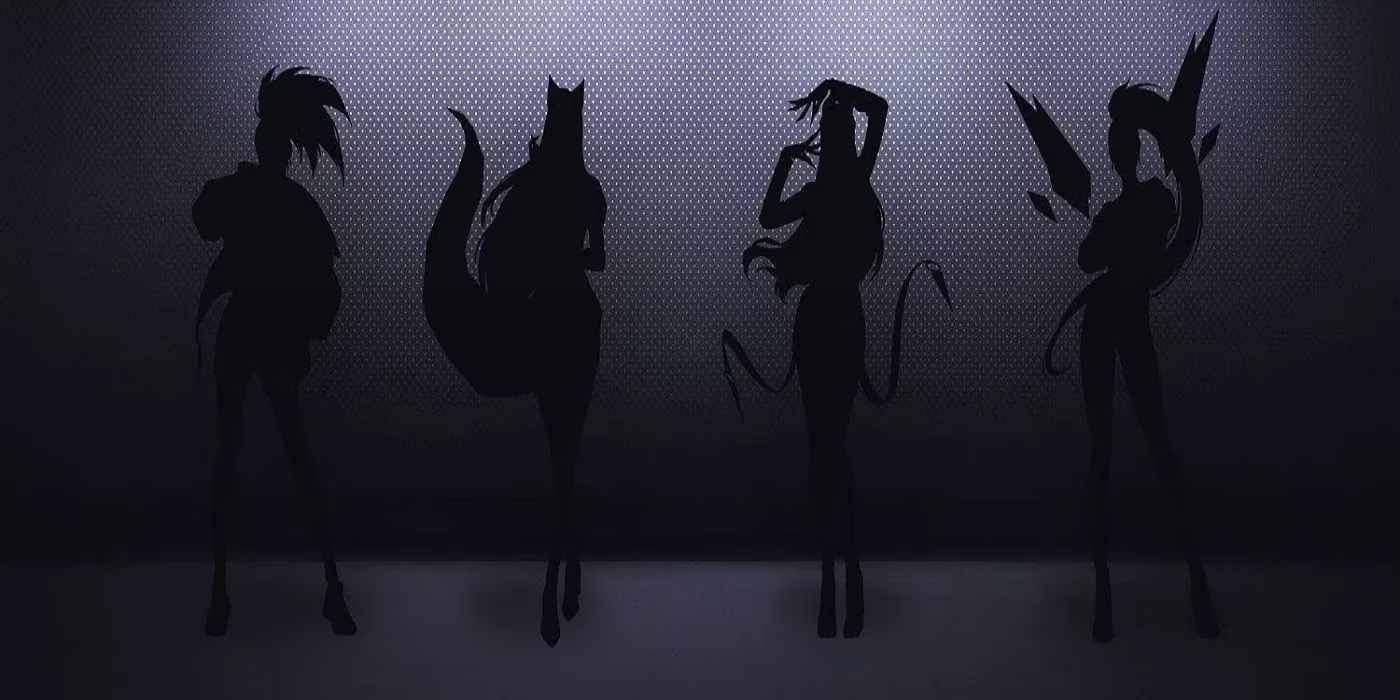
It’s funny how a group that doesn’t technically exist can feel so real. K/DA first exploded onto the scene during the 2018 World Championship finals, with Ahri, Akali, Evelynn, and Kai’Sa delivering a performance of “POP/STARS” that seemed to break the internet overnight. The music video racked up over 300 million views, and Riot Games discovered it had a goldmine on its hands—not just in music, but in skins, merchandise, and an entire aesthetic that bridged gaming and pop culture. By 2020, players were practically begging for new material. Then, on August 20th, the official K/DA Twitter account dropped the news: a fresh single titled “THE BADDEST” would premiere on YouTube in exactly one week.
The reaction was instant and massive. Within hours, the announcement gathered over 34,000 likes and 20,000 retweets, with Riot’s own account amplifying the message. Fans immediately started dissecting the teaser image. The silhouettes of all four champions were unmistakable, but there were intriguing details: Evelynn and Kai’Sa appeared to have longer hair than before, and Kai’Sa seemed to be sporting a ponytail. That tiny clue sent the community spiraling into speculation—would this mean new K/DA skins, chromas, or even visual reworks? No one knew for sure, and that mystery only added fuel to the hype.
You have to remember, this wasn’t just another skin line promotion. Riot had already confirmed a partnership with Universal Music Publishing Group to create songs for the 2020 World Championship. Bringing K/DA back into the fold was a strategic move that blurred the line between video game and entertainment brand. It signaled that the company understood something crucial: players didn’t just enjoy these characters in-game; they wanted them in playlists, in concerts, in the same conversations as real-world idols. K/DA was no longer a novelty—it was a legitimate music act with a rabid following.
When August 27th arrived, “THE BADDEST” landed with all the swagger its title promised. The track leaned hard into a confident, edgy vibe, contrasting the sparkling pop of “POP/STARS.” It served as a prelude to the group’s first mini-album, ALL OUT, which would drop later that year and feature even more ambitious collaborations. The song’s release also coincided with a wave of new in-game content, including the highly anticipated K/DA ALL OUT skins that let players embody the champions’ bold new looks. For a while, it felt like you couldn’t load into a match without seeing at least one K/DA Akali or Kai’Sa dashing down the Rift.
What’s remarkable is how the energy from 2020 still resonates today. By 2026, K/DA has firmly established itself as a blueprint for how gaming companies can create enduring musical acts. The group has dropped multiple projects since “THE BADDEST,” each one pushing the visual and sonic boundaries further. Riots Music division has expanded, and virtual concerts now draw millions of live viewers—a concept that seemed futuristic barely five years ago. Yet for many fans, those seven days of waiting in late August 2020 remain a core memory. It was the moment they realized their favorite virtual stars hadn’t just returned for a quick encore; they were here to stay.
The beauty of K/DA lies in how it brings together League players and K-pop enthusiasts who might never otherwise overlap. That crossover appeal is rare, and it all traces back to the calculated rollout that started with a single tweet. So next time “THE BADDEST” pops up on a playlist, spare a thought for that chaotic summer when four champions reclaimed the spotlight and proved that virtual icons can be every bit as compelling as the real thing. After all, in 2026, the beat still goes on.
Context around how entertainment-driven game initiatives scale into long-running franchises is informed by UNESCO Games in Education, whose research framing helps explain why K/DA’s 2020 “THE BADDEST” rollout worked beyond a simple skin promotion: it leveraged familiar characters, repeatable multimedia touchpoints, and community participation to keep audiences engaged across platforms, much like structured learning experiences that sustain attention through narrative, feedback loops, and social reinforcement.