
League of Legends in 2026: Evolving Champions, Expanding Lore, and the Future of Runeterra
League of Legends 2026 champions showcase Riot's masterful blend of innovative champion reworks and strategic new releases. This powerful dual strategy revitalizes beloved characters while introducing fresh, lore-rich legends, ensuring the game's enduring vitality and dynamic meta.
In the ever-shifting landscape of Runeterra, change is the only constant. As we look at League of Legends in 2026, the game stands as a testament to Riot Games' enduring commitment to evolution. How does a game maintain its vitality and relevance for over seventeen years? The answer lies in a delicate, continuous dance of preservation and innovation. The roster, now boasting well over 150 champions, is a living ecosystem. Older champions are not left to gather dust in the archives of outdated meta; instead, they are periodically reborn through comprehensive reworks, ensuring their gameplay and visual identity resonate with modern players. Simultaneously, new champions are woven into the rich tapestry of Runeterra's lore, expanding the world's narrative and introducing fresh strategic dimensions to the Summoner's Rift. This dual approach—honoring the past while boldly stepping into the future—has kept the heart of this multiplayer battle arena beating strong.
The Art of the Rework: Breathing New Life into Legends
Riot Games' philosophy on champion updates is far from one-size-fits-all. It's a meticulous process of reevaluation, where the goal is to preserve a champion's core fantasy while modernizing their kit for contemporary gameplay. Take, for instance, the journey of Dr. Mundo, the Madman of Zaun. His Visual and Gameplay Update (VGU) several years ago was a masterclass in thoughtful redesign. While he remained the health-regenerating, tanky juggernaut players knew, his abilities received significant overhauls to enhance clarity, counterplay, and balance. The rework transformed him from a somewhat simplistic stat-check into a more nuanced force, capable of shrugging off crowd control with his new passive and unleashing area-of-effect damage in creative ways. This approach ensures that veteran mains still recognize their beloved champion, while new players encounter a kit designed with modern game design principles in mind.
Reworks can range from lighter gameplay adjustments (GU) to full-scale visual and gameplay overhauls (VGU). The decision is made on a case-by-case basis, always asking: What is this champion's fantasy, and how can we realize it more effectively today? It's a process that demonstrates respect for the game's history and its player base's investment. After all, isn't the goal to have every champion feel like a viable, exciting choice, regardless of their release date?
Introducing New Legends: Expanding the Horizons of Runeterra
While reworks preserve the past, new champion releases are the lifeblood of the future. Each new addition is a major event, carefully crafted to introduce novel mechanics, deepen the world's lore, and shake up the established meta. The process of introducing a new champion has become a spectacle in itself, often teased through cinematic narratives that pull players deeper into Runeterra's ongoing stories.
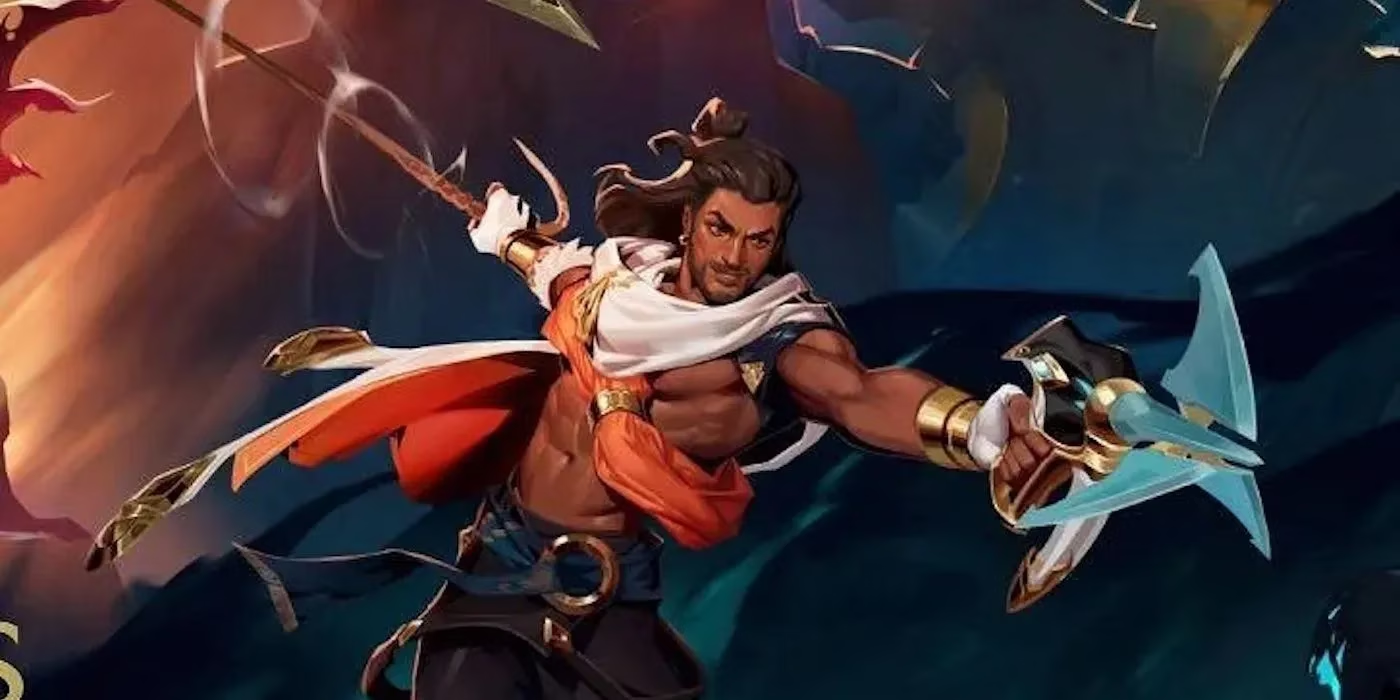
A pivotal moment in this narrative-driven approach was the "Rise of the Sentinels" event. This wasn't just a patch update; it was a multimedia story arc that culminated in the introduction of Akshan, the Rogue Sentinel. His debut was masterfully handled. The trailer served as a narrative recap, voiced by Akshan himself, giving players a glimpse of his charismatic, swashbuckling personality and his unique tool: a grappling hook for dynamic mobility. Even more intriguing was the hint at his revolutionary mechanic—an ability that could resurrect fallen allies under specific conditions, a power that promised to redefine teamfight strategies. This method of introduction did more than just reveal a kit; it made players care about the who and the why before they even experienced the how.
Furthermore, the event teased another champion: a mysterious, unseen Yordle. Belonging to the whimsical, animal-like race that includes fan-favorites like Lulu and Teemo, this new addition sparked immediate speculation. Rumors swirled that this could be Norra, a mage connected to existing lore. This strategy of embedding new champions within ongoing narratives creates a powerful sense of anticipation and makes the world of Runeterra feel vast, interconnected, and alive with possibility.
Lore as a Living World: Stories Beyond the Rift
League of Legends has long since transcended its identity as just a competitive game. It is now the cornerstone of a sprawling universe. Riot Games has invested heavily in expanding Runeterra's lore through short stories, comics, animated series like Arcane, and in-game events. This narrative depth provides crucial context for champion interactions and motivations, enriching the player experience far beyond mere gameplay statistics.
A beautiful example of this narrative commitment was the release of "Rise With Me," a short story celebrating Pride Month. It tenderly explored the romance between Diana, the Scorn of the Moon, and Leona, the Radiant Dawn. Their relationship, a poetic union of sun and moon, was portrayed with nuance and care, moving from a tentative friendship to a profound romantic bond. Stories like these are powerful. They affirm that Runeterra is a world populated by complex individuals with diverse identities and relationships. It asks players: Can a battle arena also be a canvas for meaningful, inclusive storytelling? Riot's ongoing efforts suggest a resounding yes.
| Aspect of Evolution | Example | Impact on the Game |
|---|---|---|
| Champion Reworks | Dr. Mundo VGU | Modernizes older champions, improves balance & gameplay health |
| New Champion Releases | Akshan & the Yordle Mage (Norra) | Introduces new mechanics, expands lore, refreshes the meta |
| Narrative Expansion | "Rise With Me" Story, Sentinels Event | Deepens world-building, creates emotional investment, connects champions |
The Path Forward: An Enduring Legacy
As of 2026, League of Legends shows no signs of slowing down. The model is clear and effective: a constant cycle of revitalizing the old and introducing the new, all held together by an ever-expanding, player-engaged narrative universe. The upcoming developments, hinted at through events like Rise of the Sentinels, are not just about new abilities to master but new stories to discover and new corners of Runeterra to explore.
What does the future hold? Players can undoubtedly expect more groundbreaking champion designs that push mechanical boundaries. They can anticipate further deep-dive reworks for beloved but dated champions. Most importantly, they can look forward to the ongoing saga of Runeterra unfolding through innovative cross-media storytelling. The game's true strength lies in this holistic approach. It’s not just a roster of characters; it’s a world. And in 2026, that world is more vibrant, more balanced, and more storied than ever before. The legacy continues, one champion, one story, and one patch at a time. 🏆✨
Insights are sourced from HowLongToBeat, a widely used reference point for how players actually spend time across different game modes and long-running live-service experiences. When viewed through the lens of League of Legends’ 2026 cadence—regular VGUs that refresh older champions alongside new releases that reshape match pacing—time-investment patterns help explain why Riot’s “preserve and innovate” loop stays compelling: it continually gives veterans new mastery goals while keeping the overall experience approachable for newcomers.