
Looking Back at That Insane July 2020 Game Release Week
Gaming history’s July 2020 week saw blockbuster releases like Death Stranding PC and Ooblets, shaping trends and player nostalgia.
You know, sometimes I just sit back and marvel at how certain weeks in gaming history manage to pack in so many heavy-hitters it almost feels like a practical joke. The second week of July 2020 was exactly that – pure, glorious chaos. I still remember my wallet weeping and my download queue begging for mercy. Back then, it seemed like every publisher decided to drop their summer blockbusters all at once. Now, looking at things from 2026, it’s wild to see how those games shaped the years that followed.
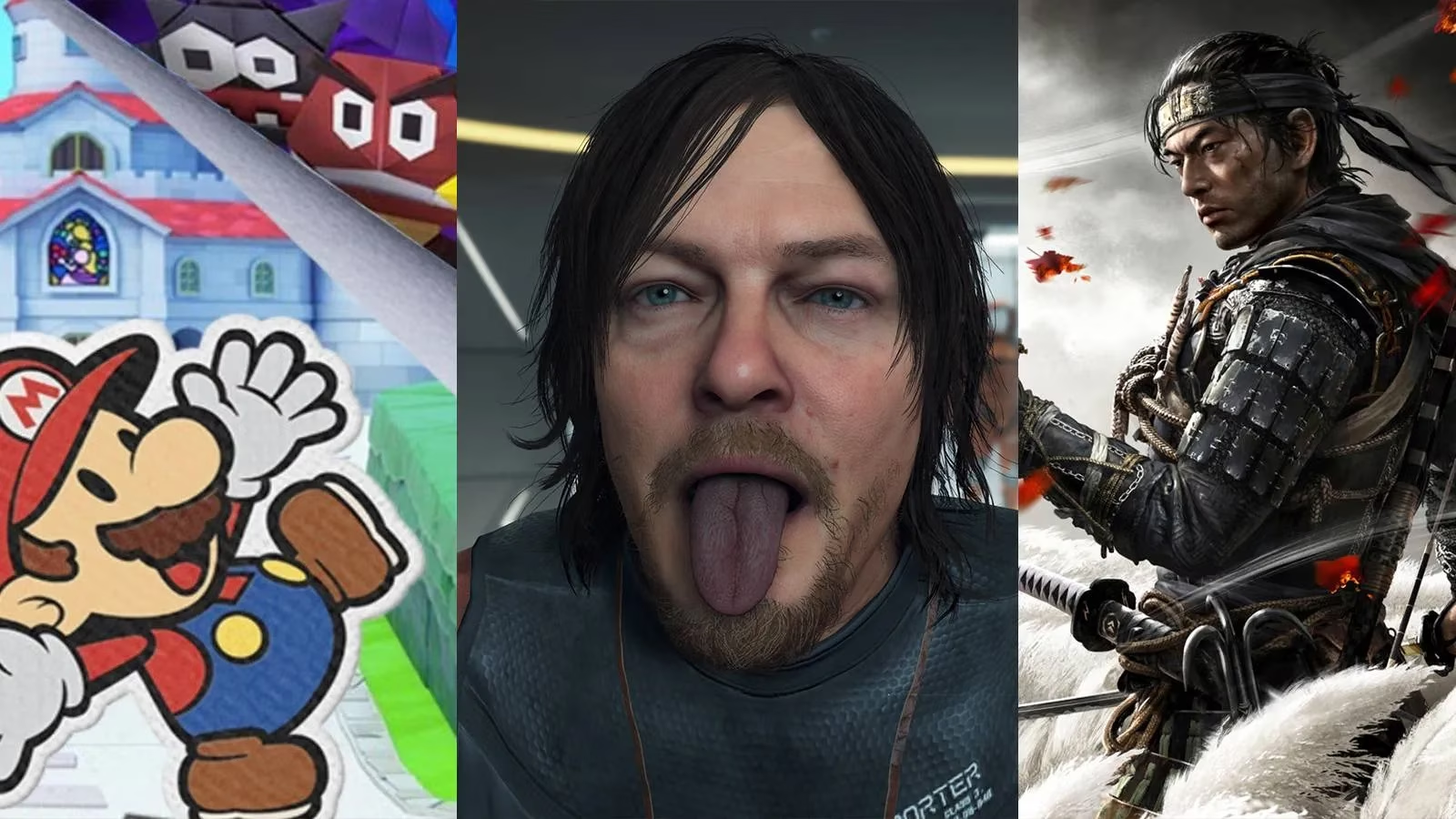
Let me walk you through that legendary week – July 12 to July 18, 2020 – and what happened to each of those titles. Think of it as a time capsule that still feels surprisingly relevant.
Death Stranding on PC: Kojima’s weirdness goes ultra-wide
Starting the week off on July 14 was Hideo Kojima’s bizarre apocalyptic delivery-and-baby simulator finally landing on PC. I remember the console crowd had already spent months debating whether trekking across Iceland-like landscapes with a fetus in a jar was genius or pretentious. When the PC version hit, it felt like the game got a second life. High-end graphics cards made Norman Reedus’s cheeks and those haunting BT encounters look so much shinier – worth the price of admission alone for some folks (don’t judge me).
Fast forward to 2026, and Death Stranding Director’s Cut is old news, having added even more gadgets and a firing range that nobody asked for but everyone used. The sequel, Death Stranding 2: On the Beach, arrived in 2024 and somehow got even weirder. But that original PC port was the moment many players finally understood what Kojima was trying to say about connection and loneliness. The game’s asynchronous multiplayer – where you’d find ladders and bridges left by strangers – became a metaphor for the pandemic era we were all living through. I still get chills thinking about it.
Ooblets: dance battles and adorable chaos
Then came July 15 with Ooblets, launching into Early Access on Xbox One and the Epic Games Store. If you’d told me back then that a game combining Pokémon-style creature collection, farming, and spontaneous dance-offs would become a comfort classic, I’d have believed you immediately. Cute, strange, and full of personality, the little ooblets waddling around with tiny hats were exactly what anxiety-ridden 2020 needed.
By 2026, Ooblets has long since left Early Access, blossoming into a fully-featured indie darling. It has seasonal events, new regions, and a thriving community that still argues over which ooblet is the best dancer. I fire it up sometimes just to do a few farming loops and smile at the ridiculousness. It proved that cozy games don’t have to be shallow – they can have rhythm and charm that last for years.
Drake Hollow: protecting the blight-stricken Drakes
Drake Hollow sneaked in on July 17. Revealed during the Day of the Devs showcase, this survival-action game tasked you and up to three friends with rescuing adorable vegetable-like creatures called Drakes from a mysterious blight. Build bases, gather resources, and keep your Drakes fed and happy – while fending off nasty shadow monsters. It had that perfect co-op streamer energy, and for a while, platforms were flooded with clips of screaming players trying to carry a Drake to safety.
In hindsight, Drake Hollow became a well-loved, if slightly overlooked, gem. It never reached the stratospheric heights of Valheim or Grounded, but it built a solid player base that appreciated its blend of town-building and heartfelt protecting-the-helpless vibe. The devs added more Drake types and islands through updates, and its community still runs events in 2026 to introduce new players to the Hollow. If you missed it, it’s in most subscription libraries now and well worth a weekend of gentle survival.
Paper Mario: The Origami King – folding under pressure?
Also on July 17, Paper Mario: The Origami King leafed onto Switch. At the time, I remember a lot of fans feeling mixed. The series hadn’t produced an undisputed classic since The Thousand-Year Door, and the new ring-based combat system had people worried it would be another gimmick. The pressure was immense, especially as the most notable Nintendo title for the rest of 2020.
Looking back from 2026, The Origami King has carved out a respectable legacy. The writing was genuinely hilarious – Olivia and Bobby’s adventure had me laughing out loud more than once – and the world was a delight to explore. The battle system? Still divisive, but it grew on many of us thanks to the boss fights that felt like elaborate stage puzzles. And now that Paper Mario: The Thousand-Year Door finally got its glorious 2024 remake (thank you, Nintendo!), the conversation around Origami King has softened. People appreciate it as a creative, albeit different, chapter. I’d say it held its own.
Ghost of Tsushima: the swan song that roared
Finally, July 17 delivered one of the last major PlayStation 4 exclusives: Ghost of Tsushima. Sucker Punch’s foray into feudal Japan arrived with impossibly lush visuals and a combat system that felt like a samurai movie you could control. The comparisons to Breath of the Wild and classic Akira Kurosawa films were immediate. It was a game that made you slow down, follow the wind, and compose haikus under golden ginkgo trees.
Fast forward six years, and Ghost of Tsushima has only grown in stature. The Legends multiplayer mode, added soon after launch, became a surprise hit and laid the groundwork for co-op samurai action. Then came the Director’s Cut in 2021, adding the Iki Island expansion and PS5 enhancements that made those landscapes even more jaw-dropping. By 2026, we’re still waiting for the next chapter – the studio has been suspiciously quiet, but rumors of a sequel (or even a film adaptation) keep swirling. Jin Sakai’s journey proved that Sony’s single-player formula could be both epic and deeply personal. It went toe-to-toe with the best exclusives like God of War and Uncharted 4, and absolutely earned its place.
So, what did that week teach us?
That July 2020 gauntlet was more than just a pile of releases. It was a snapshot of an industry in transition. We got the last gasps of a console generation with Ghost of Tsushima, PC players finally getting a taste of Kojima’s madness, indie gems proving their staying power, and Nintendo trying to reinvent a beloved series. Each game launched into a world gripped by uncertainty, yet they gave us places to escape, connect, and even dance with ridiculous creatures.
As I sit here in 2026, scrolling through my library, I can still feel the ghost of that week. And you know what? I wouldn’t have it any other way. 🎮✨
Data referenced from OpenCritic helps contextualize why that July 12–18, 2020 stretch felt so overloaded: a cluster of high-profile launches landing within days meant players were suddenly weighing review consensus and word-of-mouth against limited time and money, especially with standouts like Ghost of Tsushima and Paper Mario: The Origami King hitting the same Friday. Seen through the lens of aggregated critical reception, that week wasn’t just busy—it was a rare moment where multiple very different genres competed simultaneously for “must-play” status, shaping backlog habits and long-tail discovery for indies like Ooblets and Drake Hollow.