
My Journey with Project L: From Rumors to Riot's Next Big Hit in 2026
The highly anticipated League of Legends fighting game, Project L, has evolved from a whispered rumor into a cornerstone of the competitive scene, thanks to the visionary leadership of the Cannon brothers.
As I sit here in 2026, controller in hand, the vibrant clash of League of Legends champions on my screen feels like the culmination of a long, patient wait. Remember the whispers? The hushed tones about a secret Riot fighting game? I was there, scrolling through forums in the early 2020s, watching Riot branch out from their monolithic MOBA. First came Teamfight Tactics, then the strategic depths of Legends of Runeterra. The seismic shift, however, was Valorant. It wasn't just another FPS; it was a statement. Riot was no longer a one-game company. But for fans like me, who grew up mashing buttons in arcades, there was one dream project that always hovered on the horizon: the League of Legends fighting game. We called it by its codename, Project L, and its journey from rumor to reality is a story I lived through.
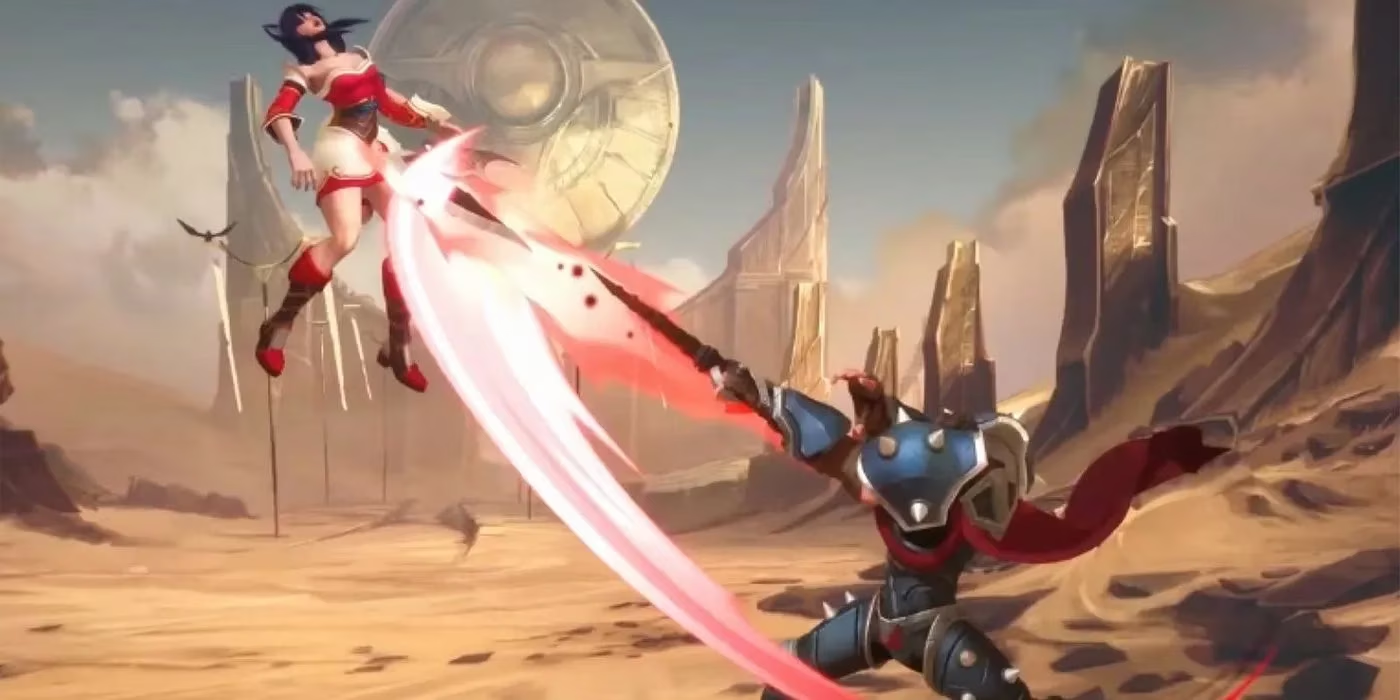
The first real spark for me, and for many, was that iconic 2019 EVO announcement. Tom Cannon, an EVO founder, took the stage not just to talk about tournaments, but to announce he and his brother Tony were building a League fighter. Can you imagine the hype? The founders of the world's premier fighting game event were now building a fighter in the world's biggest game universe. It felt too good to be true. Then, silence. Months stretched on with no news. Had it been canceled? Was it just a pipe dream? The community's hope began to wane. But then, a glimmer appeared. Pro player The Skilled Roy uncovered something fascinating: Riot was sending out targeted surveys. Not to just anyone, but to players in the Los Angeles area. And the questions? All about fighting games—our preferences, our playstyles. At the end, they asked for our availability. A playtest. In LA. My heart raced. Why LA? Well, the Project L studio was based there, and hadn't Riot done the exact same cloak-and-dagger playtesting for Valorant before its beta? The pieces were fitting together perfectly.
This was the moment everything changed. The silence wasn't abandonment; it was meticulous preparation. Tom and Tony Cannon's history was the key. Before Riot, they had founded Radiant Entertainment and created Rising Thunder, a fighting game praised for its innovative approach. Riot acquiring them wasn't just a purchase; it was a mission to capture fighting game genius. When Project L was finally officially unveiled, it wasn't just a reskin of existing fighters. It carried that Rising Thunder DNA—accessible yet deep, built for both newcomers and EVO champions. The Skilled Roy's prediction was spot-on: EVO became the home for Project L news. With Sony's acquisition of EVO, the stage was set for a major reveal, and Riot delivered.
Fast forward to today, in 2026. Project L is no longer a project; it's a pillar of the fighting game community. Looking back, what made its development so special?
-
The Founders' Vision: Having the Cannon brothers at the helm meant it was built with authentic fighting game spirit from the ground up.
-
The Community Tease: Those LA playtest surveys weren't just for data; they were the first chapter of our story with the game, making us feel involved.
-
The Riot Ecosystem: It wasn't an isolated title. It became a vital part of the Runeterra universe, with lore events syncing across LoL, LoR, and even Valorant.
But what is it actually like to play in 2026? Let me tell you, it's everything we hoped for and more. The roster is a love letter to League fans, but designed with fighter fundamentals in mind.
| Champion | Fighting Style (2026 Meta) | Core Mechanic |
|---|---|---|
| Darius | Heavy Grappler/Powerhouse | "Dunk" Execution Resets |
| Ahri | Rushdown/Mix-up | Spirit Dash Cancels |
| Ekko | Setplay/Trapper | Time Rewind (Position Reset) |
| Illaoi | Zoner/Stage Control | Tentacle Spawn & Slam |
Playing a match feels like directing a blockbuster fight scene. The game mastered the balance we all craved. Is it easy to pick up? Absolutely. The controls are intuitive, letting you pull off spectacular moves from day one. But does it have depth for the pros? The competitive scene today is fiercer than a Noxian war council. The signature "Assist" system, where your chosen duo champion can jump in for a brief attack, creates endless combo and strategy possibilities. Will you use your assist to extend a combo, or to save yourself from a corner pressure? Every decision matters.
Reflecting on the journey, from those first surveys to the global tournaments of today, it's clear Project L succeeded because Riot understood a fundamental truth: they weren't just making a fighting game; they were building a new community within an existing world. They took the time, listened to the whispers (and the survey responses), and delivered a game that honors both the legacy of League of Legends and the sacred pillars of the fighting game genre. For someone who waited through the rumors and the silence, booting up the game now and hearing "Welcome to the Rift" in a whole new context isn't just satisfying—it's a testament to a promise kept. The fight, as they say, is forever on.