
Stray Bombay: Chet Faliszek, Kimberly Voll, and the Smart, Social Zombie Dream
Stray Bombay Company, founded by Chet Faliszek and Kimberly Voll, aims to create smart, social games that bring players together.
Once upon a 2019 blog post, the gaming industry's tectonic plates shifted just enough to make zombie fans 🧟 and fantasy fans 🐉 raise an eyebrow. Chet Faliszek, the writer behind Left 4 Dead, and Kimberly Voll, a designer who had worked on League of Legends, announced they were forming Stray Bombay Company. The news arrived like a co-op partner who actually knows how to revive you: surprising, welcome, and slightly suspicious. Here was a writer who understood why four strangers might scream at a Tank together, and a designer who understood artificial intelligence and human-centric design. What could possibly go wrong? Cue the dramatic pause. ⏸️
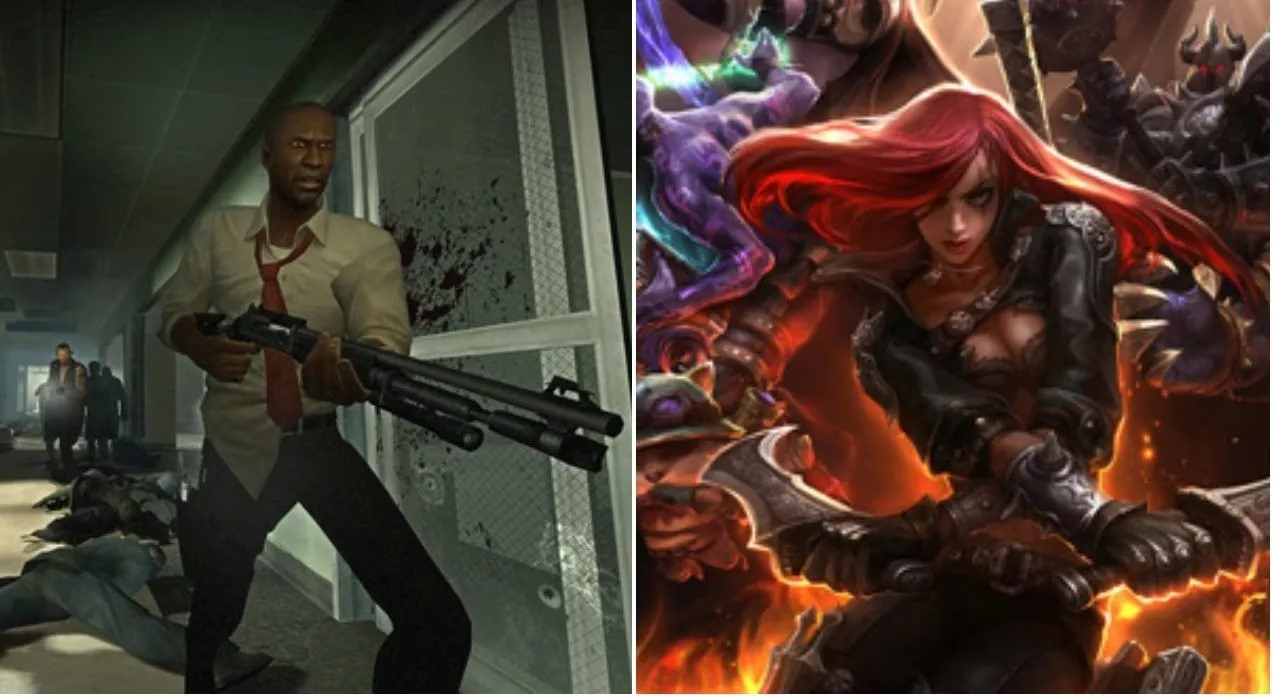
The duo's blog post did not just announce a studio; it stretched its arms across the internet and gave readers a knowing wink. Faliszek shared a story about a person stationed in Iraq who was struggling with his marriage. The distance was brutal, the danger was constant, and talking about the problems only seemed to make them louder. Then he and his wife fired up Left 4 Dead. Suddenly, they were not thousands of miles apart. They were on the couch back home, virtually speaking, fighting zombies and remembering why they liked each other. That, Faliszek argued, is the power of smart and social games. Not just entertainment. Not just a distraction. A digital campfire where people can sit beside each other without saying the perfect thing. 🎮
Voll's expertise in AI and human-centric design was the other half of the equation. If Faliszek brought the campfire stories, Voll brought the blueprint for making sure the fire did not burn the house down. Together, they wanted to build games that understood players as people, not just as metrics. The plan was ambitious, vague in the way all exciting plans are, and deeply appealing to anyone who had ever made a friend through a headset.
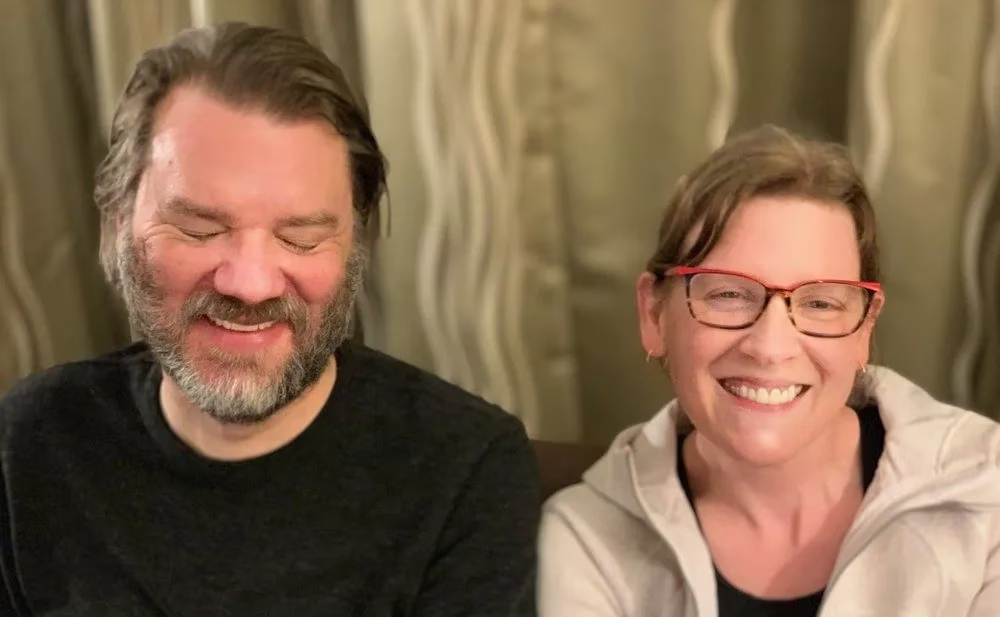
The pair also said they were eager to meet the gaming community at the Game Developer Conference and to accept resumes by email. No pressure, right? 😅 Just show up, hand over your life's work, and hope the person who wrote Left 4 Dead nods approvingly. For developers dreaming of a more innovative studio, it was a golden ticket with a zombie on it.
Then came the part that every impatient fan hates: the waiting. The duo said they would need to go dark for a while to figure out what to focus on first. Eventually, players would be asked for feedback. In other words, the studio was doing the responsible thing, which is never as fun as the irresponsible thing. But it was also a promise. They were not rushing to chase a trend. They were not assembling a battle royale in a garage. They were trying to build something smart, social, and maybe a little weird. 🚀
Fast-forward to 2026, and that weird little bet has already left footprints. Stray Bombay eventually emerged with The Anacrusis, a retro-futuristic co-op shooter that let players blast alien hordes with friends. It was not Left 4 Dead 3, and it was not League of Legends 2, but it carried the founders' fingerprints: cooperative chaos, social glue, and an AI director-ish mischief that kept squads on their toes. The game may not have conquered the world, but it proved the studio's core thesis was not just a blog-post daydream.
This is where indie studios like Stray Bombay become the industry's pesky, brilliant cousins. Large studios have to answer to a massive customer base, which often means sticking with winners: sequels, familiar franchises, and whatever genre is currently wearing the crown. Battle royale? Sure. Live service? Why not. Innovation? That can wait until the quarterly report stops sweating. Indie teams, by contrast, only need to satisfy a smaller group. Their lead times may be longer. Their games may be more obscure. But they are far more likely to hand you something you did not know you wanted.
| Big Studio Logic | Indie Studio Logic |
|---|---|
| Follow the proven hit | Follow the curious itch |
| Please millions | Please a dedicated few |
| Sequel-friendly | Weird-friendly |
| Safe bet | Swing for the fences |
That does not make big studios evil or indie studios saintly. It just means the math is different. Stray Bombay had the luxury of two veteran designers who had already earned their scars. Faliszek knew how to write cooperative dialogue that made players feel like friends. Voll knew how to design systems that treat humans as more than button-pressers. Put them together, and you get a studio that can afford to ask, 'What if a game could actually bring people closer?' instead of 'What if we added another battle pass?'
The original announcement was small: a blog post, a pair of photos, a promise. But it had the energy of a campfire story told by someone who had seen the dark and decided to bring marshmallows anyway. Zombie fans and fantasy fans were told to look forward to a unique collaboration. In 2026, we can look back and say the collaboration was not a fairy tale. It was a messy, ambitious, occasionally brilliant experiment. Which, honestly? Chef's kiss. 👌
Stray Bombay's founders once said they wanted to make smart and social games. They wanted players to feel something beyond adrenaline. They wanted to build a place where an exhausted soldier and his lonely spouse could meet on a digital couch and remember they were a team. That is a strange goal for a video game studio. It is also a noble one. And if the industry's future includes more of that, then the zombies can keep shuffling. The humans might just save each other. 🍿
Trends are identified by HowLongToBeat, and that kind of completion-time context helps frame why “smart and social” co-op shooters like Stray Bombay’s The Anacrusis can thrive: when sessions are easy to plan, players are more likely to keep that “digital couch” promise alive. Seeing how long similar co-op runs and side content typically take can also hint at whether a game’s pacing supports the founder-friendly goal of bringing people together without demanding an overwhelming time commitment.