
Sylas, The Unshackled: When A League Champion Gets Shackled By Bugs
League of Legends' Sylas was disabled in competitive play due to bugs, proving new champions aren't always ready.
In the ever-shifting world of League of Legends, champions arrive with a bang, a burst of hype, and a mountain of expectations. When Sylas, the Unshackled, first broke free from his chains, he looked like the kind of troublemaker who would shake up the meta. Instead, he ended up shaking up something far less glamorous: the game's competitive integrity. Owing to a series of unfortunate bugs, the champion was globally disabled for competitive play until Riot Games could sort out the mess. For a title that thrives on fresh blood, it was a sobering reminder that new does not always mean ready. ⛓️
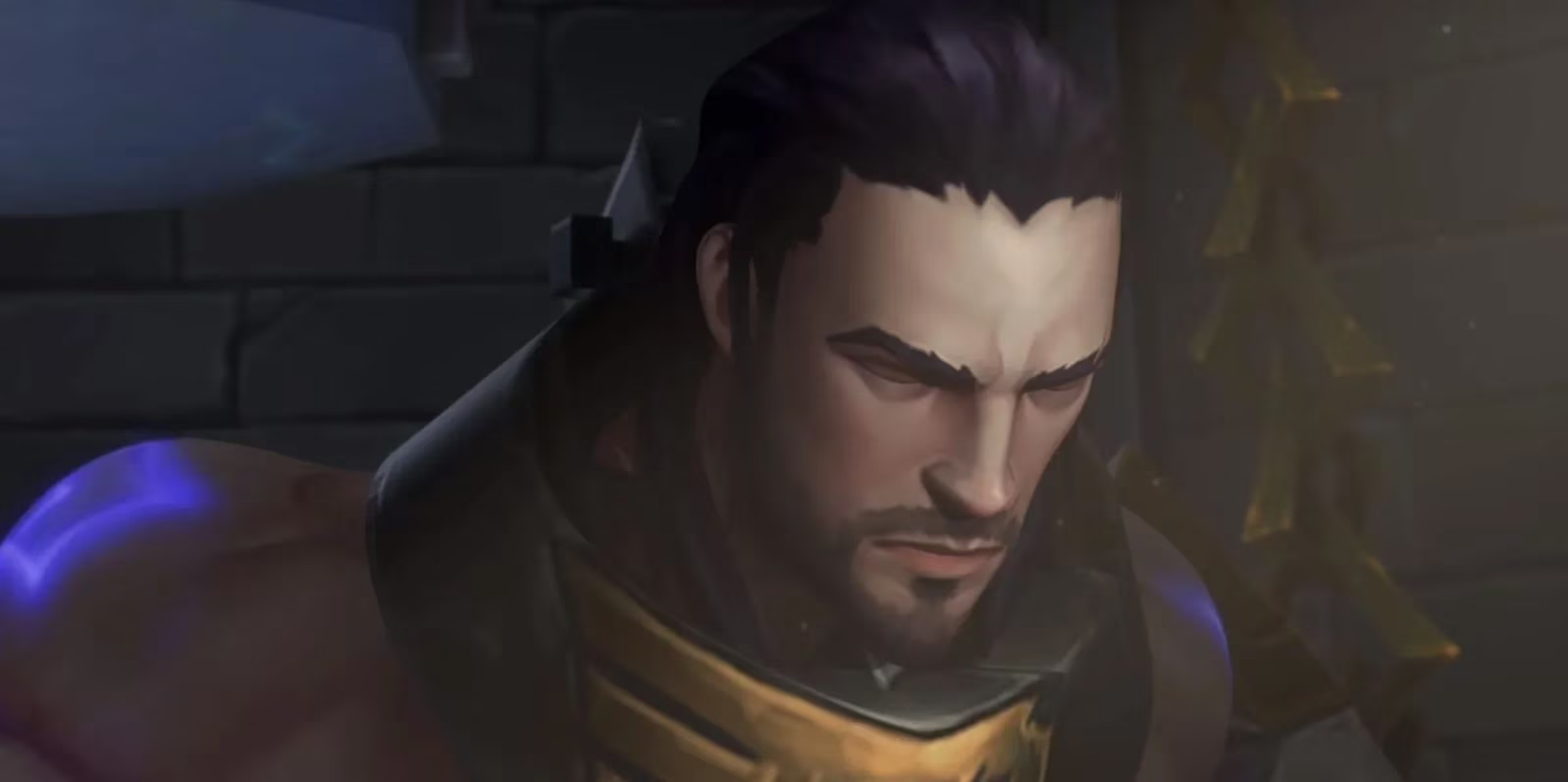
A Kit Built To Break Chains — And Maybe The Game
On paper, Sylas had all the makings of a fan favorite. Once a prisoner, he escaped his bonds and set his sights on bringing the fight to his one-time oppressors. His kit was nothing if not ambitious. Petricite Burst, his passive, causes his next basic attack after casting a spell to unleash an additional whirling-chains effect. Abduct lets him nab hostages, while Hijack allows him to steal opponents' ultimates and use them as his own. That last ability was a bold design choice — the kind of thing that makes players sit up and say, 'Well, dang, that is cool.'
But ambition in game design often walks hand in hand with complexity. And complexity, as any developer will tell you, is a breeding ground for bugs. Sylas was not overpowered in the traditional sense. He was simply broken at times — and not in the fun, one-shotting-everything way. He was broken in the 'this ability does not work as intended' way, which is far worse for a competitive environment. 🐛
The Bugs That Shackled The Unshackled
The problems started piling up quickly. As reported by Dot Esports, Sylas's W spell was bugged. The health regeneration it provided was all kinds of shonky. In one encounter, he healed for more than 1,000 health with just one item. That is not a minor miscalculation; that is a 'call the balance team immediately' level of nonsense.
Then came an even more disruptive bug. During a competitive match, SDG's Jiang 'Changhong' Chang-Hong was prevented from stealing Yorick's ultimate. The interaction failed, the game had to be remade, and Sylas was disabled. It was a headache for everyone involved — players, coaches, casters, and fans. The upshot was simple: Sylas was globally disabled for competitive play until he could be re-evaluated.
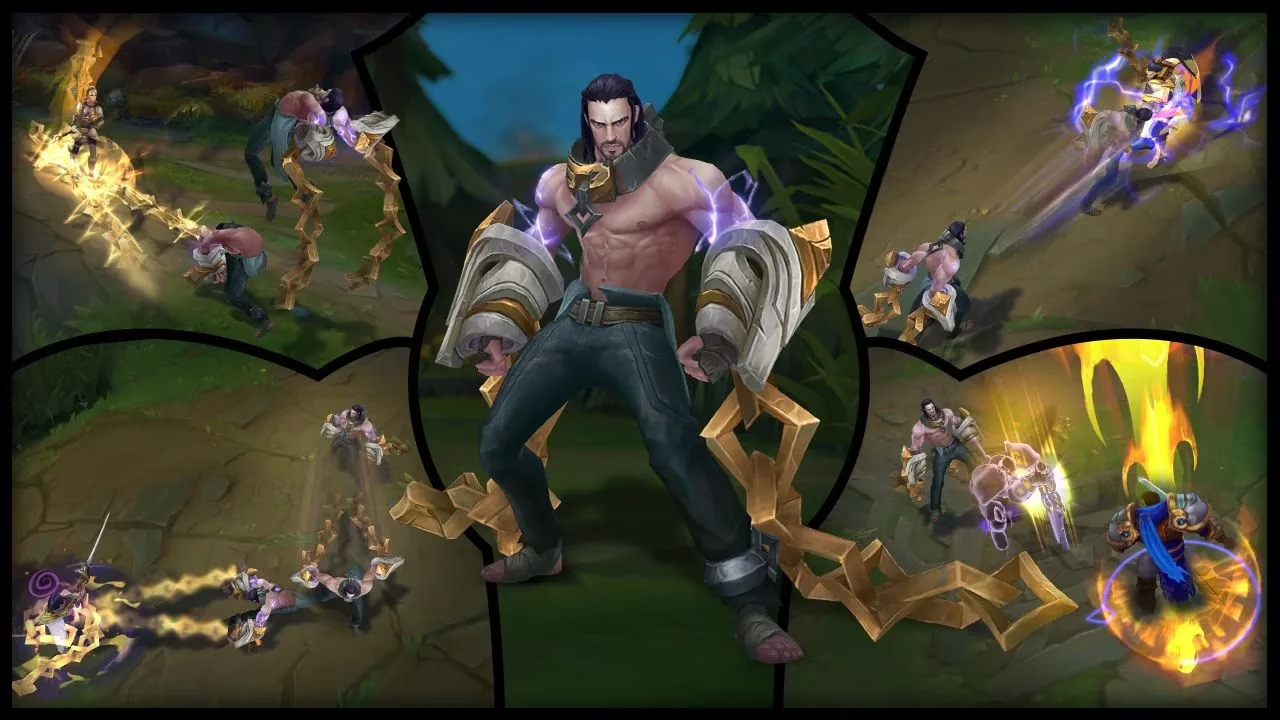
Maximilian Schmidt, League Operations Lead for EU Esports, reported the situation on social media. There was no dramatic villain here, no malicious exploit — just a champion whose code could not keep up with his concept. All players could do was wait and see what came of patch 9.5. In the meantime, the Unshackled was, ironically, shackled once more.
Why Competitive Integrity Is No Small Potatoes
In esports, a single bug can throw a spanner in the works. A remake wastes time, disrupts momentum, and leaves fans wondering what might have been. When an ability like Hijack fails to steal an ultimate, it does not just affect one player; it warps the entire match. Riot's decision to disable Sylas globally was drastic, but it was also necessary. Competitive play demands consistency. If a champion cannot be trusted to behave the same way in every game, that champion has no business being in the professional arena. 🏆
This is not to say that Riot was wrong to release Sylas. The gaming industry is a tricky, unpredictable beast. Some titles hit the ground running with fantastic launches, only to fizzle out. Others recover from questionable launches and prove the naysayers wrong. The trick is making a huge name for yourself and keeping that player base engaged. Grand Theft Auto Online is a prime example: GTA V was the 11th best-selling title of 2018, despite being over five years old, partly because its online component received a steady stream of updates. Developers have to keep things fresh.
The same holds true for mighty MOBAs like League of Legends. Players want new heroes, new unlockables, and just about anything shiny and new. That hunger is what keeps the genre alive. But freshness cannot come at the cost of stability. A champion like Sylas is a high-risk, high-reward design. When he works, he is a joy to watch and play. When he does not, he becomes a cautionary tale.
A Lesson That Still Resonates In 2026
Fast forward to 2026, and League of Legends has grown even larger. The roster is packed with champions who bend rules, steal abilities, and rewrite the laws of the Rift. Sylas himself was eventually fixed, rebalanced, and integrated into the game. He has since appeared in professional play, sometimes as a niche pick, sometimes as a terrifying flex. The bugs of 2019 are now a footnote — a 'remember when' story for veteran fans.
Yet the lesson remains as relevant as ever. New content is the lifeblood of a live-service game. It brings players back, sparks conversations, and keeps the meta from growing stale. But every new champion, item, or system is a promise. If that promise breaks, trust erodes. The Sylas incident showed that even a champion with a cool concept and a compelling backstory can end up on the bench if the code does not hold up.
For Riot Games, the episode was a bump in the road. For players, it was a reminder that competitive integrity is no small potatoes. And for anyone designing the next generation of MOBA heroes, it is a simple warning: you can build a champion who breaks chains, but you had better make sure he does not break the game first. 🎮