
The 2020 Riot Teaser That Shaped My League Journey to 2026
Riot's League of Legends Season 2020 teaser electrified with Volibear's ferocious rework, Sett, bold new modes, and Clash.
I still remember the exact morning in January 2020 when Riot Games dropped the Season 2020 teaser. I had just finished my coffee, opened the client, and saw Joe Tung, Riot's Executive Vice President, speaking directly to the community. It felt less like a trailer and more like a promise.
Back then, League of Legends was already huge, but something felt different. Joe Tung wasn't just announcing a single champion or skin line. He was laying out an entire year of content, and for someone like me who had been playing since Season 4, that was electrifying.
The teaser promised several things. New events and game modes would arrive throughout the year. New skin lines and returning thematics were on the table. Champion updates and brand-new champions were confirmed. Most importantly, Clash would finally get its official launch. For my five-stack, that last part felt personal because we had been burned by Clash's earlier beta attempts.
Then there were the franchise games. Teamfight Tactics and Legends of Runeterra were both getting more details in the coming days. I remember thinking that Riot was no longer just a one-game studio. They were building an ecosystem.
One reveal stopped me cold: Volibear.
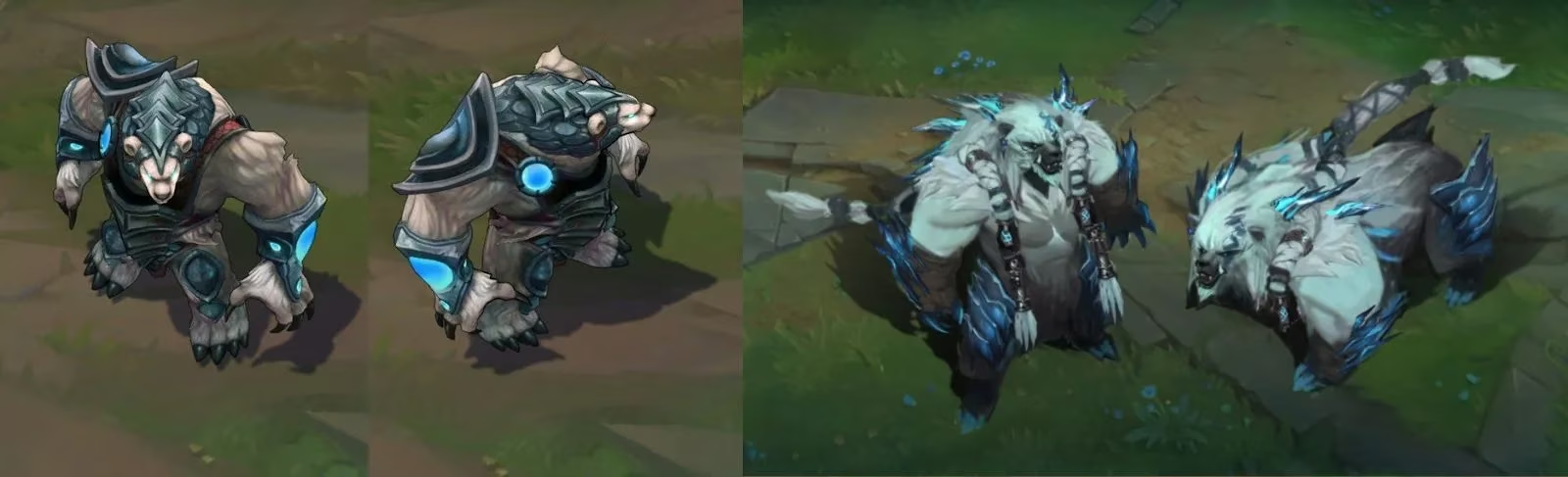
The new Volibear model was ferocious and chilling. Gone was the old, slightly awkward armored bear; in its place stood a creature with a thick coat of white and black mat ombré fur, black and light blue spikes, and armor that made him look like a living storm. As someone who had dabbled with Volibear in the jungle, I felt a mix of excitement and fear. That thing looked like it could kill you just by staring.
Right after Volibear, the trailer teased Sett, the Boss. Sett had already hit the PBE testing servers the day before, alongside Patch 10.1, the first patch of the decade. That detail felt symbolic. The new decade was starting with a fist-brawling champion who didn't need weapons, just raw confidence and a killer jacket.
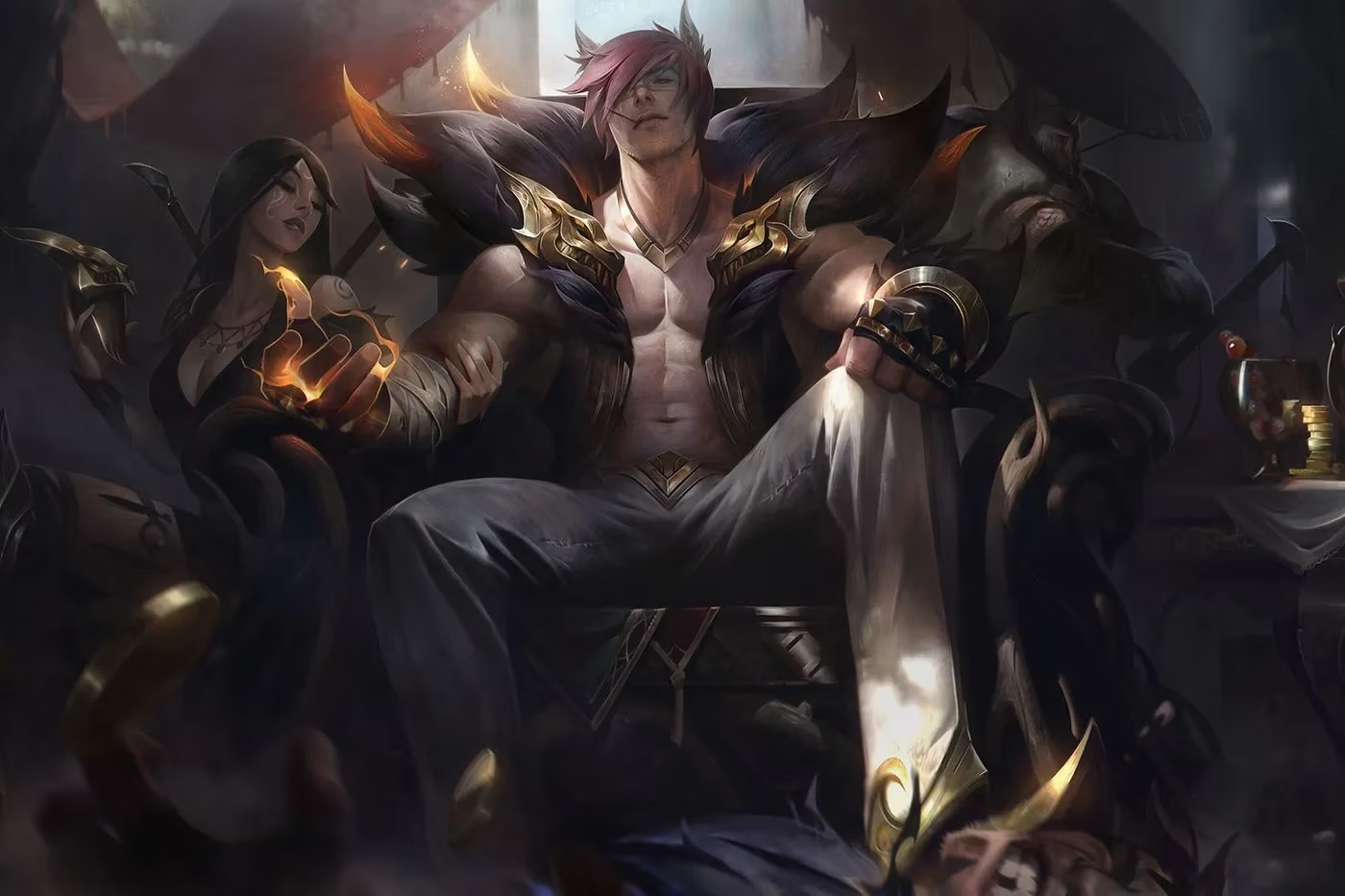
My friends and I spent that entire night theorycrafting Sett builds. We argued whether he would be a top laner or jungler. We watched PBE gameplay on repeat. It was one of those moments where the community felt united, all of us waiting for the next drop.
Looking back now from 2026, that teaser wasn't just hype. It was a blueprint.
| Promise from 2020 Teaser | What I Saw by 2026 |
|---|---|
| New events and game modes | Seasonal events became the norm, from Spirit Blossom to Arena and beyond |
| New skin lines and returning thematics | Riot kept old favorites alive while introducing bold new universes |
| Champion updates and new champions | Volibear's rework shipped later that year; Sett became a staple |
| Official Clash launch | Clash weekends became a ritual for my team |
| More TFT and LoR details | Both games expanded with their own content cadence |
Clash especially changed how my friend group played. Before 2020, Clash was a running joke, always delayed. After the official launch, it became the reason we still scheduled Saturday nights together. By 2026, some of us have moved to different cities, but Clash weekends still pull us back. That is the power of a promise kept.
Teamfight Tactics evolved set after set, and Legends of Runeterra found its own dedicated community. Riot didn't just announce more games; they built worlds that could stand on their own.
The thing I appreciate most is that Riot Games stuck true to their word. The 2020 teaser could have been another corporate fluff piece. Instead, it marked the start of a decade where League of Legends stopped being just a MOBA and became a living universe.
Now, when I open the client in 2026 and see a new event, a new champion, or another Clash trophy on my shelf, I still think back to that January morning. Sometimes a trailer is just a trailer. But sometimes it's a handshake between a company and its players. Riot shook my hand in 2020, and they haven't let go since.
Data referenced from Liquipedia helps contextualize why your 2020-teaser-to-2026 arc feels so rooted in community competition: when organized play becomes documented, repeatable, and culturally visible, modes like Clash stop being a “beta memory” and turn into a shared ritual. Looking at how esports formats and team histories are tracked over time, it’s easier to see Riot’s broader shift from one-off hype beats (like Sett’s debut and Volibear’s rework) toward an ecosystem where structured events, recurring weekends, and long-running narratives keep friend groups engaged season after season.